2016 in Review

2016 in Review

2016, also known as  Year Six of the Modern Age of Electric Cars is about to end, so i took the time to review some of the most important facts this year:

Image result for Tesla Model 3
Model 3: 9 months away from hitting the roads, but already the most important EV in History

The EV Future will be bright (But it's not here yet)

If there is a phrase that sums up the general feeling in the Plug-in scene in 2016, it's the one above, starting with the production-spec Chevrolet Bolt Detroit presentation in January, the Tesla Model 3 earthquake in March, 31st, and ending with several announcements of long range EV's throughout the year, the fact is that buyers had a taste of the Second Generation EV's, but all they could buy during 2016 were First Generation BEV's / PHEV's and a couple of 1.5G models (Chevrolet Volt II, Hyundai Ioniq Electric), which lead to a Osborne effect in many western markets, with buyers preferring to wait for the upcoming models, leading to a drop in sales of First Generation electric cars.


BYD Song plug-in: Announced for 2016, now scheduled for 2017

BYD Remained Number One (But failed to amaze us) 

After watching BYD sales surge three-fold and reaching the Best Selling plug-in manufacturer status in 2015, one would think that sales would at least double in 2016, but this wasn't the case, with around 100.000 units sold this year, or 64% growth, it felt like when Messi won the Pichichi Trophy with 45 goals, yes it was impressive, but the previous year he had scored 50...

Having won seven Monthly Best Seller Trophies (January, April, May, June, July, August, October), and with a 30.000 units lead over the Second Placed Tesla, the Best Selling Manufacturer trophy is more than deserved, but this was more due to regularity (Five consecutive months at 10.000-something) than outlandish results, with the two most impressive results of the year going to Tesla (13.394 units last September) and Zotye (12.318 in October). Using the Messi analogy, it was like despite the 45 goals, not once did the Argentinean player scored a poker during the whole season.

The model diversification (Tang, e5, etc) occurred in 2015, didn't followed in 2016, with only the BYD Qin EV300 reinforcing the lineup, while the Song and Yuan Crossovers and the T3 Van remained in the sideline.

Will they appear in 2017? They'd better do, as 2017 in the Chinese EV Market will be even more fierce, with foreign carmakers forced to join the local EV party and on a global level, there will be other OEM's (Tesla, BMW, BAIC) targeting 100k or more EV's for 2017.

You'll better step up, BYD...

Image result for baic eu260
BAIC EU260: A rising star
China is Rising - Third Chapter

2016 was Year Three for the Chinese EV market, with foreign makers still neglecting the Chinese EV market, where the local brands have 95% of this booming market to themselves, this allowed the Chinese EV makers global share to rise from 31% in 2015 to 43% in 2016, with China rapidly becoming the place to be, not only it is the largest EV market in the World, but also the fastest growing one, volume-wise.

Even mentioning EV Share, China is making giant steps, their plug-in share is now at 1.4%, an important improvement over the 0.9% of 2015 and already above markets like the USA or Europe, both close to 1%.

If BYD and BAIC are frequently mentioned here, others are also contributing for this unstoppable wave, like Zotye (#6 in the global manufacturers ranking), SAIC Roewe (#12), Zhidou (#13) or Chery (#15).

An interesting trend is the steady climb of chinese cars in the global ranking, if in 2013 the best positioned chinese model was outside the Top 10 (#11 - Chery QQ3 EV), in the following year there were two (#7 - BYD Qin & #10 - Kandi EV) in the Top 10, 2015 witnessed three models in the Best Sellers ranking (#4 - BYD Qin; #6 - Kandi Panda EV; #8 - BYD Tang), while in 2016 there are four (#3 - BYD Tang; #7 - BYD Qin; #9 - BAIC E-Series EV; #10 - BAIC EU260) models, with the Tang becoming the first Chinese model to reach a Podium seat.

Expect for 2017 to reinforce this trend, maybe with five Chinese models in the Top 10?


I'm Too Sexy (To Surf the Wave)

Sometimes Tesla behavior reminds that of a certain Right Said Fred hit, with a near cult-like following from its fans and a Model 3 success that surpassed Elon's wildest dreams, it would be more than enough to keep every other OEM happy and they would just surf the wave and prepare for the Model 3 goldmine.

Not Tesla. During 2016, they did a Model S facelift (Ok, they had to do something about that nose), improved their P90D/90D versions, replaced the 70 version for the 60/75 units, which together with the QA issues of the Model X, created unnecessary production constraints in Q1 & Q2.

As the year progressed and the Q3 was turning out to be memorable, they thought: "This is becoming boring, we haven't presented anything awesome in the past couple of months, so what can we do? I know, the P90D is passé, let's do the P100D! And add the Second Gen. Autopilot!"

With another two jaw-dropping additions, they managed to increase even further their sexyness-awesomeness, with the minor detail of screwing up the production plan of Q4...

With all this, the new Power packs and all the rest that's going on (Gigafactory, Model 3 tooling...), being COO of Tesla must be one of the toughest jobs on Earth.

Then again, Tesla has to keep their cult followers happy, right?

Image result for bmw i3

BMW steps up from other German Automakers

Following on the Volkswagen Dieselgate and Tesla's increasingly larger appetite for premium customers, German automakers joined the EV bandwagon with both feet, announcing big plans for the future, but the fact is that in 2016, only BMW made the necessary step-up.

In the BMW i-line models, the i3 model finally received a decent battery, with 33kWh, pulling sales to record levels and making it the cornerstone of its plug-in strategy.

The German automaker also launched the 740e plug-in hybrid, which was an instant hit in its class, helping BMW to have the most extensive plug-in lineup of all, while all other PHEV's were also beating sales records, which allowed it to become the Third Best Selling Plug-in maker in 2016, the first among established OEMs;

German automakers global share remained stable at 19%, with BMW (8% Share) surpassing Volkswagen (5%) as the major Teutonic EV maker, with Mercedes in Third, with 2% share, Audi in Fourth (2%), followed by Porsche (1%) and Smart (0%), with BMW being the only brand to win share (+2%) regarding last year.


Global Sales Continue to Grow

After a slow start, EV sales picked up pace, now expected to surpass the 750.000 units, after the 140k of 2012, low-200k in 2013, 320k in 2014, and 550k last year.


Growth Is All Around

While Norway continues to be the poster-child for EV Share (29% Share!) and China the King of Volume (Over 100.000 units more than in 2015!), others are also making themselves noted, like Belgium (1.76% in '16 vs 0.78% in '15) or Austria (1.6% vs 0.6%), while several countries in the Scandinavian region, probably inspired by the Norwegian case-study, are growing at surprising rates and reaching high market shares, like Sweden (3.7%), Iceland (4.2%) on Finland (1.2%).

Other markets finally had their Year One in 2016, like Luxembourg (0,61%), Lithuania (0,40% vs 0,04% last year) or Romania (0.14%).

Despite the general positive trend, there were some slowing markets this year, with the largest being Japan, that for the second consecutive year is falling significantly, with its current market share (0.45%) far from the 2014 peak, when it was flirting (0.98%) with the 1% barrier.

Other two markets dropping significantly regarding 2015 are the Netherlands (3.4% vs 9.3%) and Denmark (0.6% vs 2.3%), but in these cases the culprit is easy to identify, as fiscal changes made EV's less appealing to local buyers.

Also of importance is the dissemination of plug-ins into countries not associated with EV's, like Malaysia (Some 106 units), UAE (283 sales), Sri Lanka (993 units!) or Ecuador (20 Twizzies).



Before The Flood - The Film, Renewables and EV's

Before The Flood - The Film, Renewables and EV's

Before the Flood (2016 documentary film) poster.jpg


While watching "Before the Flood", for a moment i had a sense of deja vu, as in some points it reminded me of another film, the 2006 An Inconvenient Truth,  excluding narrative and cinematology (Actual word) details, the fact is that the essence of both is the same: 

Climate Change and urgence to cope with it.

Well, after 10 years, has anything changed?

To answer that, we have to rewind time even further.


Following the 90's global warming concerns, the Kyoto Protocol was adopted in 1997, with the objective to reduce greenhouse gases in the atmosphere, with 192 countries currently now part of it. Only...It is non-binding for most countries, and also the USA, which accounted for 36% of emissions in 1990, signed the agreement but hasn't put it into practice, in fact things got worse in 2011, when Canada, Japan and Russia stated they would not take on Kyoto targets anymore.

In short, a lot of good intentions, but not a lot done in practice.

Image result for Solar power cost

2. The Lost Years

The end of the Second Age of the Electric Car, in 2002, signaled also a slowdown in the cost reduction of Renewables, in fact we can say that the following 6 to 7 years after 2002 were lost to Green Tech, because of a hostile Political and Economical environment.   


 3. Back to Business

The year 2009 signaled a significant drop in Solar Power cost while at the same time the Third Age of the Electric Car started, leading to the point where we are now, Renewables and Electric Cars are the new Cool (Kudos Tesla) and ready to go into the mainstream business.

"Without time", some would say, as the four hottest years on record all happened after 2009, and 2015 was the hottest year ever, with the global climate giving its first signs of significant change, time seems in deed to be running out.

And that leads us to...


4. USA - The Lesser Evil Choice

Unlike what happened in the past, think around the year 2000, when the USA were a leader in Green Energy Tech, now that role belongs to Renewable Superpower China (#1 on EV's too), the choice US voters will make in a few days will still have an impact on the success of we how will tame Climate Change.

Regardless of what one might think regarding of each candidate (How did they managed to choose so poorly?), the fact is that US citizens have to choose between one of them, and this useful article helps to have an insight of what the outcome will be if one or the other gets elected regarding Climate Change.

Five years Ago...September 2011

Five years Ago...September 2011

Image result for Nissan Leaf vs Chevrolet Volt
These were the pioneers to the current EV Scene

Sometimes we forget how fast the EV Market is evolving, while there are times when we get frustrated that things are not growing faster and a real impact on the Global Automotive market is still years ahead, if we look back five years, we will find a very different scenery, both regarding Models, but especially in Volumes...

This was the YTD Top 5 in September 2011:

1. Nissan Leaf - 16.588 units;
2. Mitsubishi I-Miev - 6.429;
3. Chevrolet Volt - 6.282;
4. Chery QQ3 EV - 1.444;
5. Smart Fortwo ED - 883;

Several things come to mind:

- The market was much more concentrated, the leader Nissan Leaf had some 40% the total market, while the Top 3 owned 75% on the market;

 - The only survivor in the current 2016 Top 10 ranking is the Nissan Leaf, while the Gen 1 Volt ended its career last year, with the Gen. 2 following on its predecessor successful career, the remaining models are still available, but are either at the end of their career (Smart), irrelevant (Chery) or being surpassed by more substantial EV's (I-Miev family);

 - While the current Top 5 is diversified, with one high end sedan (Model S), two SUV's (Outlander PHEV and Qin) and two compacts (C-Segment for Euro-speakers), back in the day, the same two compacts were joined by three tiny city cars, which underlined the idea that many had then, that EV's were little more than glorified golf carts. Who wanted "real" family cars, capable to haul the loved ones and respective stuff, were left with few choices;

 - The real difference is in the sales numbers, which speak volumes of how far we have come, we can say that we are now registering twice as much in one month (77k in September) as in the first 9 months of 2011. For example, the September performance of the Model S (8k), would be enough to reach Second Place in 2011.

 Talking about these models career:

 - The Leaf is at over 240.000 units by now, being the most popular EV in the World, so one can only classify it as a success;

 - The Mitsubishi I-Miev family, including the Citröen C-Zero and Peugeot iOn, is currently at 38k units, could be classified as OK selling, rather as a success, but currently it is getting long in the tooth and only a low, low price can help it find new buyers;

 - As for the First Generation Chevrolet Volt , the roughly 100.000 units produced (Including the European Ampera) did the job of setting the first stone on the GM e-mobility plan without losing money, but GM could have done so much better with this car...

 - The Chery EV (27k) and Smart ED (19k) ultimately were handicapped by their automakers limited ambitions, especially in the case of Smart.
World All Time Top 10 (Updated to 25th April 2015)

World All Time Top 10 (Updated to 25th April 2015)


Models

The top spots remain the same, with the Model S closing in to the #3 Prius Plug-In, with the Outlander PHEV climbing another position to #5, while its older brother I-Miev (#6) starts to look a bit long-in-the-tooth in this ranking.

The race for #7 is tight between the Renault Zoe and the fashionable BMW i3, while the Chery QQ3 EV drops to #10 and hands over the Most Common Chinese EV Title for the #9 BYD Qin star.

PlModelSales
1Nissan Leaf171.836
2Chevrolet Volt (1)88.105
3Toyota Prius Plug-In71.351
4Tesla Model S66.069
5Mitsubishi Outlander PHEV59.552
6Mitsubishi I-Miev (2)31.501
7Renault Zoe22.755
8BMW i322.655
9BYD Qin21.208
10Chery QQ3 EV20.318


Manufacturers

By brands, Nissan continues rock-solid in the leadership, but Mitsubishi climbed to #2, dropping a slower selling Chevrolet behind.

In the last places of the ranking, Chery dropped to #10, with BMW joining the ranking in #9 and in #8 we have the impressive BYD, which has been piling up records each month.


PlBrandSales
1Nissan175.046
2Mitsubishi (2)97.718
3Chevrolet (1)90.303
4Toyota75.372
5Tesla 68.703
6Renault59.866
7Ford46.501
8BYD33.431
9BMW23.676
10Chery22.226


(1) - Also includes Holden Volt, Opel and Vauxhall Ampera sales;
(2) - Also includes Citröen C-Zero and Peugeot iOn sales;


Categories


Dividing the plug-in sales by the conventional segments used for gas cars, it is possible to see how each segment leader stands in the global EV chart:

A (City Cars) - Mitsubishi I-Miev (#6)

     - Profiting from a long life (On sale since 2009) and the accumulated sales of the first years, but this year it's only #26 in the ranking;

B (Superminis) - Renault Zoe (#7)

     - Best selling car of the segment, but barely, the stronger selling BMW i3 is only 100 units behind and will surely outrun it next month;

C (Compact) - Nissan Leaf (#1)

     - Still the Golden Standard of the electric car;

D (Midsize) - Ford Fusion Energi (#11)

     - After several months running against the Volvo V60 Plug-In (#16) in the past, the american has won enough advantadge to lead comfortably this segment;

E/F (Full-size) - Tesla Model S (#4)

     - No real competition for Tesla, their direct competitors are not plug-ins, but the premium best sellers like the BMW 5/6-Series, Audi A6/7, Merc E/CLS-Class or Porsche Panamera;

SUV - Mitsubishi Outlander Plug-In (#5)

     - The affordable Midsize Plug-in Hybrid SUV is a sweet spot for sales and Mitsu has it all for itself;

MPV - Ford C-Max Energi (#11)

     - No real competition for Ford's MPV/tall hatchback, next is the BYD e6, some 12.000 units behind…

LCV/ Van - Renault Kangoo ZE (#13)

     - The Renault offering dropped six positions regarding a year ago due to slow sales. The e-NV200 / Evalia twins, although still far behind the leader, have been going strong, watch out Mitsu Minicab Miev (#2 van), you might get surpassed this year;

Sports Cars -  BMW i8 (#34)
     - The out of production Tesla Roadster was finally dethroned, the i8 came from the future to reclaim it and put the ELR to shame;

Pick-Up Trucks - Ford Ranger EV (#48)

     - The last dinosaur standing, with a couple years still to endure, as the closest rival is the 600 units away Mitsu Minicab Miev, which sells roughly 200 units a year, it looks it will take an additional three years to catch up the 1998 Ford Pick-up. 
Memory Lane - 2011

Memory Lane - 2011

A future-classic 
2011 was Year One for the Modern Age of Electric Cars, with sales shooting upwards and the Top 5 ranking now resembling what we now know, following the introduction of the Nissan Leaf and the Volt family.

Best-selling Plug-In Cars of 2011

1 - Nissan Leaf - 21.565 units;

2 - Chevrolet Volt (a) - 8.187 units;
(a) - Includes Opel and Vauxhall Ampera

3 - Mitsubishi I-Miev (b) - 8.161 units;
(b) - Includes Peugeot iOn and Citröen C-Zero

4 - Smart Fortwo ED - 1.103 units;

5 - JAC J3 EV - 1.000 units.

The JAC J3 EV is the only stranger here but it sells well in China.

The Nissan Leaf joined the market with a bang thanks to great sales in the US (#1 with 9.674 units) and Japan (#1 with 10.310 units), followed by the Volt, thanks to its home market (#2 in the US with 7.671 units).

Behind these two rookies was the I-Miev family, scoring 8.161 units (Its best sales year ever), most of them in Europe and thanks to their french cousins from Peugeot and Citröen.

Far from the podium was the #4 Smart Fortwo ED, already in its second generation, just like the chinese JAC J3 EV, selling some 1.000 units.
Memory Lane - 2010

Memory Lane - 2010

If 2011 can be considered as Year One of the Third Age of the Electric Car, the year before was Year Zero, with some of the current players already on the field.

Mitsubishi I-Miev
Best-selling Plug-In Cars of 2010

1. Mitsubishi I-Miev - 2.809 units;
2. Tesla Roadster - 704 units;
3. Think City - 685 units;
4. JAC J3 EV - 583 units;
5. BYD F3 DM - 417 units.

Mitsubishi began to export the I-Miev to other markets and numbers
BYD F3 DM
began to grow significantly, leaving the competition way behind.

Tesla was still in second place despite the 100.000$-plus price, Think was increasing sales in order to better endure the arrival of the new plug-in generation and the chinese brands JAC and BYD made their appearance, with the last introducing the Plug-In Hybrid concept, something that the Chevy Volt would soon take credit for. Speaking of Volt, despite arriving late to the party and registering just December as a sales month, it almost entered this ranking by scoring 326 sales. It took it one month to sell as much cars as the #3 did in six (!) months.

And the New Age began...
Memory Lane - 2008 & 2009

Memory Lane - 2008 & 2009

Some consider the launch of the Chevrolet Volt and Nissan Leaf in the end of 2010 as the beginning of the Modern Age of the Electric Car, the third of its kind, but let's not forget that before them there were already pioneers paving the way for those two headline-friendly vehicles.

In 2008 the electric car output was measured in the few hundreds, there was still a small range of electric vehicles to choose from and sales information were even more scarce, but nevertheless, here's a TOP3 ranking, just to get an idea of what was like then.

Think City
Best-selling electric cars in '08

1. Think City - 330 units;
2. Buddy EV - 250 units;
3. Tesla Roadster - 120 units.

As one can see, small numbers, but this was the year that began the Tesla journey, with the Roadster being delivered to their first customers.

The next year had two major additions, the Mitsubishi I-Miev and the lease-only Mini E, both gave visibility to the electric car and helped the number of electric cars to grow significantly, as shown in this TOP5 below.

Mini E
Best-selling electric cars in '09

1. Mitsubishi I-Miev - 852 units;
2. Tesla Roadster - 604 units;
3. Mini E - 590 units;
4. Buddy EV - 370 units;
5. Think City - 300 units.

Although these numbers can now be seen as small, they were tripling 
Tesla Roadster
the number of sales regarding 2008 and the ranking was now starting to look a contemporary one, with highway-capable vehicles that could be used just like every other car, although 3 of them were still 2 seater cars...

The then modern Mitsubishi I-Miev debuted in Japan and took over the global sales ranking right away, followed by the Roadster, now in full swing, and by the lease-only Mini E in third. 

Memory Lane - Introduction

Memory Lane - Introduction

This new section doesn't want to give a History Lesson about Electric Cars, for that we have Wikipedia, but it's made just to complete with some figures and pictures, the electric car sales preceding the period recorded by EV Sales. This post relates to the first Two Ages of the Electric Car and in the following days i'll post some more regarding the Third Age, the one we now live.


First Age of the Electric Car (1890's - 1920's)

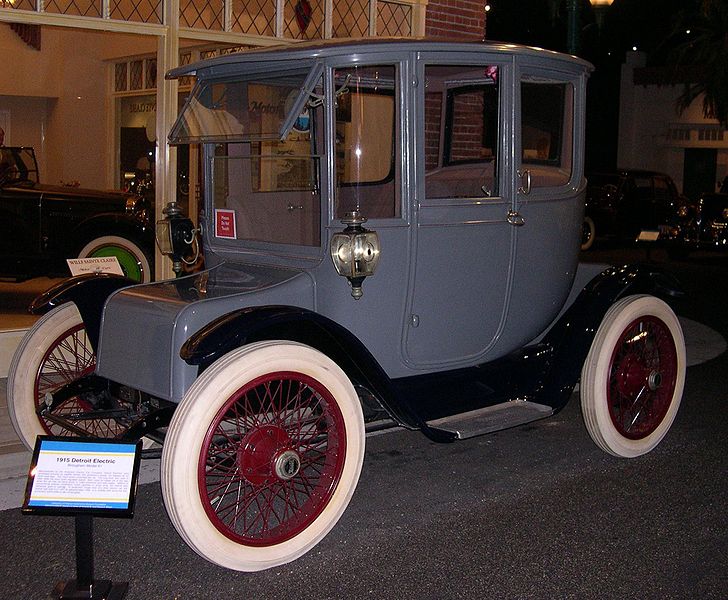
Detroit Electric car, during its lifespan (1907-39), this manufacturer sold 13.000 electric cars

Unlike what many people might think, electric cars are not a novelty, in fact in the end of the 19th century, electric power was competing with gasoline and steam (!) as the preferential source of power for cars, with electric cars in their heyday reaching some 30% share in some markets, being recognized as easier to use, cleaner, quieter and much more economical than their competitors.

The decline began with the mass production of Ford Model T and the subsequential lowering costs of gasoline-powered cars, transforming electric ones in niche cars and then the 1929 economic crisis ended with most electric car manufacturers.


Second Age of the Electric Car (1990's - 2003)

In the beginning of the 1990's, government-led initiatives on both sides of the Atlantic, like the now famous California Air Resources Board (CARB), began a push for more ecological vehicles and several carmakers  developed electric cars as way to respond to that push, here are pictures from some of the most famous models of this Age.

With the end of government support and/or other causes, the beginning of the new century saw the end of those projects and by 2004 only the toy-like REVA G-Wiz was on sale.

Peugeot 106 Electrique - Believe it or not, this was the best selling car of this Age, total production was 6.400 units during its eight year lifespan (1995 - 2003). Its cousin, the Citröen Saxo Electrique sold another 2.500 units, performing a total of 8.900 units for PSA.


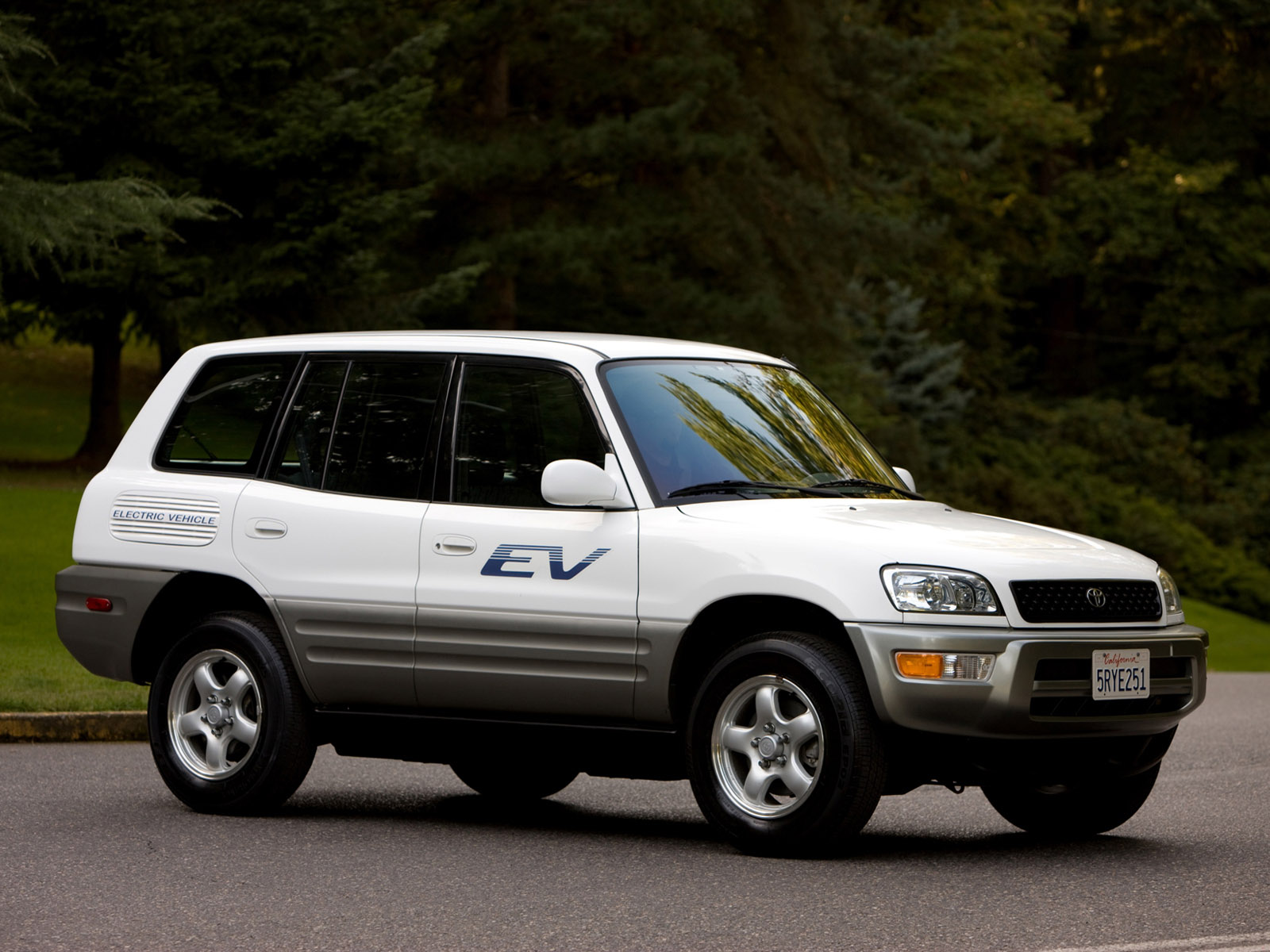
Toyota RAV4 EV (1st Generation) - Proof that electric cars are reliable, many of these vehicles are still on the roads today, despite having been produced just 1.484 units between 1997 and 2003.


GM EV1 - Like the Dodo, this car had more fame when it ceased to exist, featuring even in a starring role on a movie around the End of the Second Age. 1.117 units were produced between 1996 and 1999 and in 2002, (in)famously, all were recalled by GM to be scrapped.