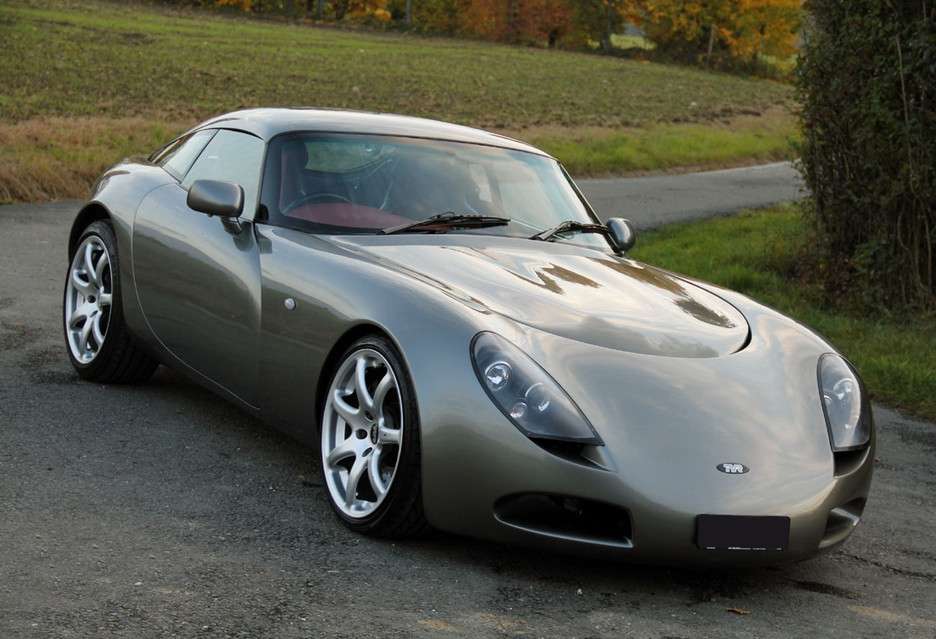
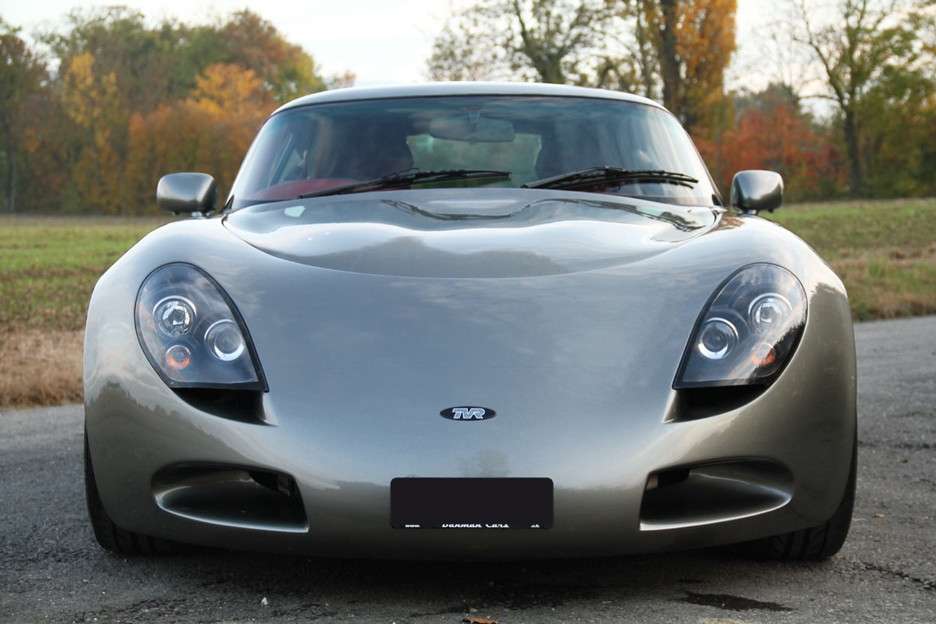
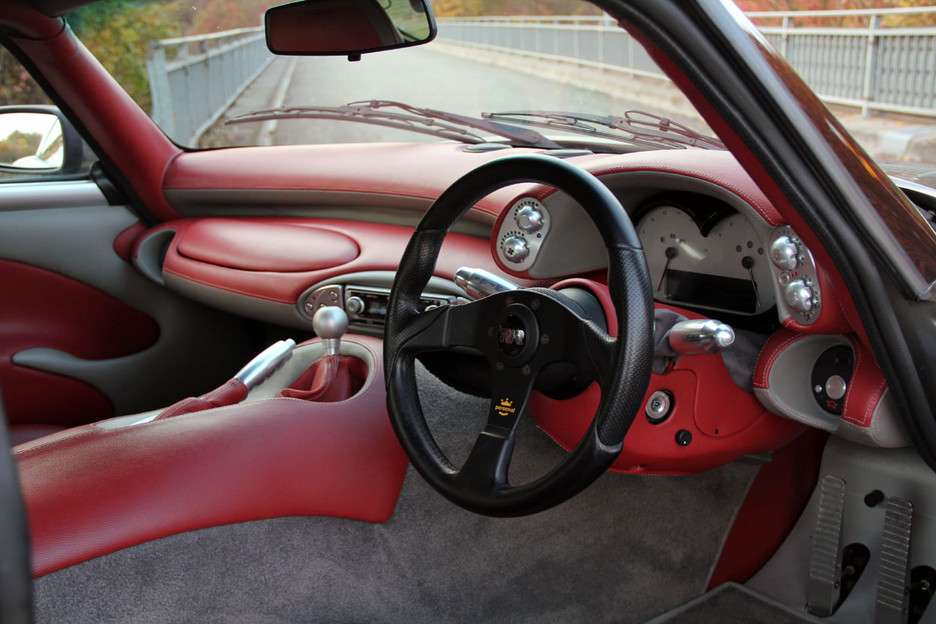
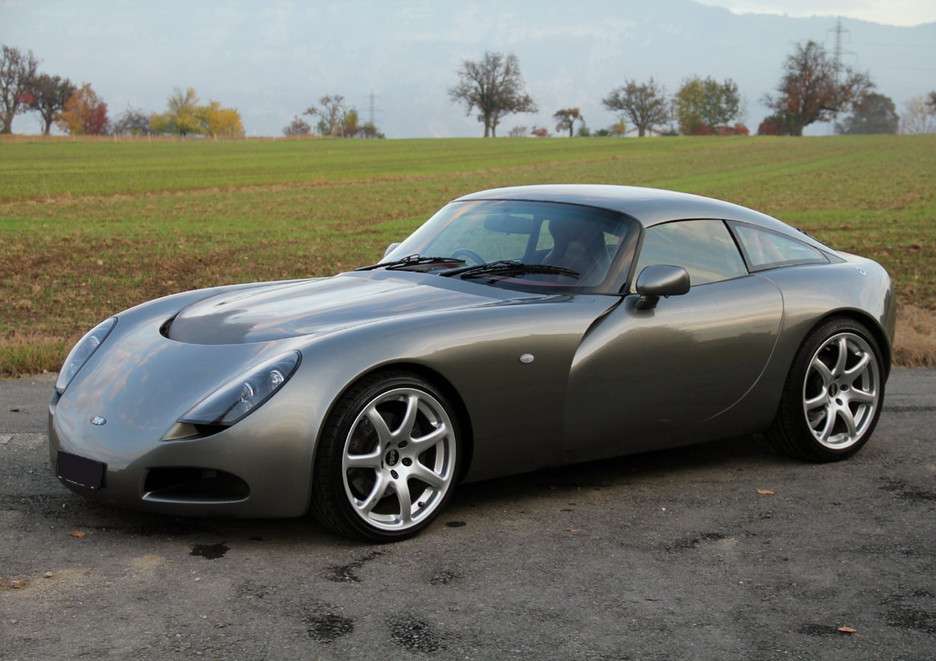
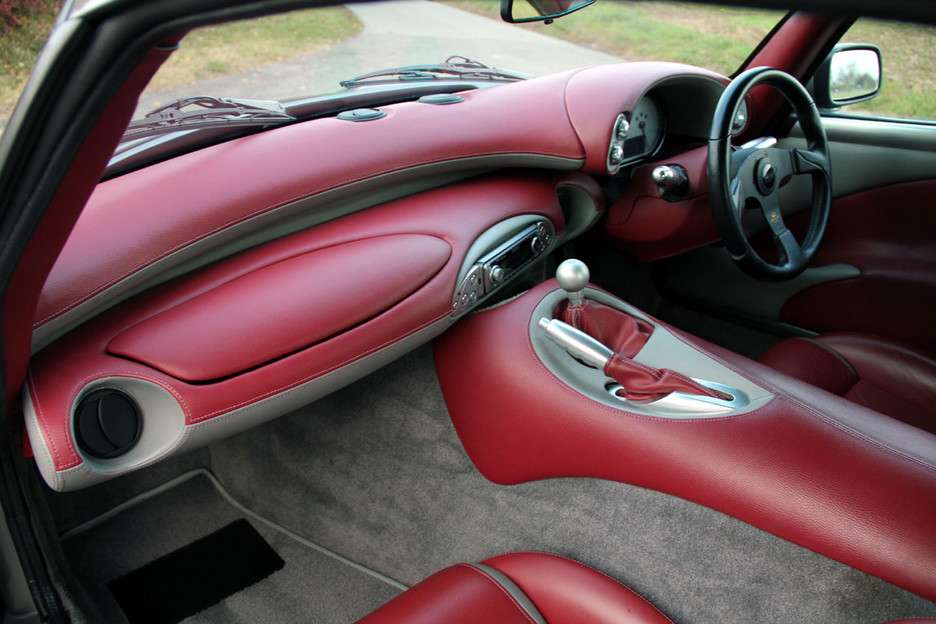
TVR is back - but patience is a virtue

IT'S GREAT news that TVR is back.

After so many rumours and false starts it finally looks as though things are looking up for my favourite manufacturer. Les Edgar, the current company boss, didn't do a Lotus and promise the world all sorts of exotic appetisers when he bought the defunct manufacturer back in 2013.

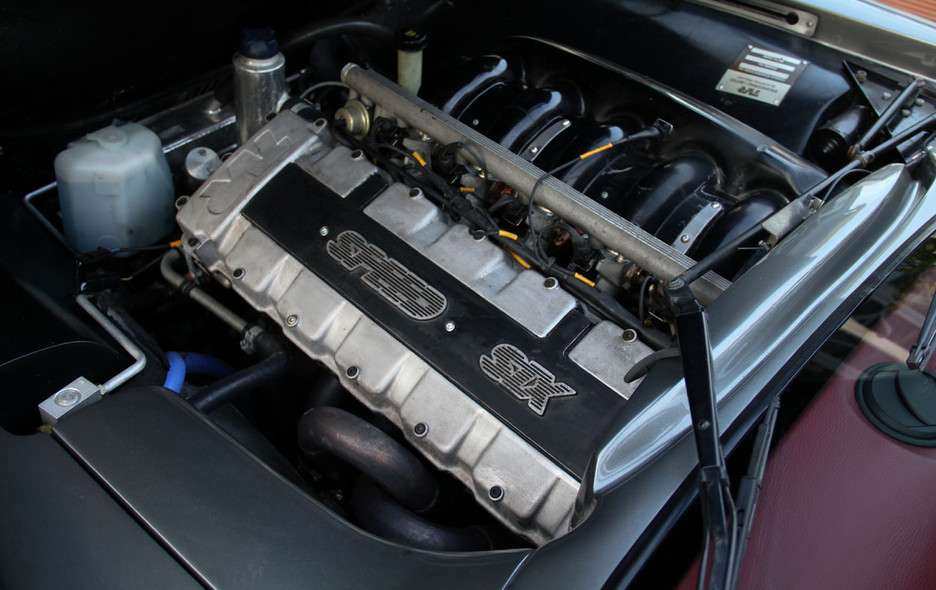
What he did instead was quietly assemble a team, worked out what he wanted to do and then went off and did it - and what he's come back with is a design partnership with McLaren F1 design legend Gordon Murray, an engine agreement with Cosworth - yes, as in Escort Cosworth fame - and plans for four new models. I'd normally say I can't wait, but in this case I - and every other sports car nut - will have to wait two years.

Which - if you're familiar with the world of British sports cars - is a rare bit of common sense.

For every MG or Morgan the British landscape is littered with defunct sports car names who undid themselves with overambitious - and not terribly well thought out - ideas. Remember the Delfino Ferroce? Or the Strathcarron SC-5A? Or the Dare DZ? Of course you don't, but I remember all of them being touted during my motoring youth as brilliant new ways of cracking the sports car nut. Of all those two-seater hopefuls that bit of history I can only think of one - the Ariel Atom - that's pulled it off.


TVR, of course, was at one point the dominant force in British sports cars but prudence wasn't exactly its strong point. Rather than honing its existing offerings - the wonderful Chimaera and Griffith - it decided to ditch its supply of Rover V8s and come with its own engines, go racing at Le Mans and create the Cerbera Speed 12, a car so powerful it broke the machine used to test it. Like all good parties, it had a colossal hangover, and the Blackpool factory closed its doors nearly a decade ago.

That's why I'm glad - from the initial signs at least - Mr Edgar isn't over-egging the pudding. He's realised he can't do it alone and teamed up with some of the best brains in the British car industry, and more importantly he's taking his time to get it right.

I'm sure I can't be the only petrolhead who'd rather wait two years for TVR to get its revival just right than to have another Delfino Ferroce rushed into the showrooms. If you've ever listened to a Griffith at a set of lights or watched a Tuscan being thrashed at a track day you'll realise those three letters mean so much more than something you order at a cocktail bar and that it's important its custodians don't cock it up.

No rush, chaps. No rush at all!

Why it isn't hard to get a go in your favourite car

FORGET swimming with dolphins or selfies in front of the Taj Mahal. Surely the ultimate red letter day has to be driving your favourite car.

That’s why I switched my excitement level to giddy schoolboy setting when I was finally told I’d be getting a go in my ultimate ‘bedroom wall’ car. Over the years I’ve been lucky enough to drive Ferraris and Lotuses to Rolls-Royces and Jaguars, but with the notable exception of the E-type none of those were Blu-tacked proudly above my desk when I was eight years old.

That particular honour, in fact, went to something built just over the water in Blackpool using some Rover V8s and a never-ending supply of glassfibre. That’s why I’ve spent the last 20 years just itching to get a go in a TVR Griffith.

I love this car because it had that wonderfully British underdog quality. It was a sinuously styled two-seater which in the early Nineties had the ability to embarrass the Ferrari 348 and the Porsche 911, despite costing about half the price. It had a tuned version of my favourite engine – if you can’t imagine what a bored out Rover V8 sounds like, just imagine a thunderstorm with the volume doubled. It was the car that put a tiny Lancashire manufacturer on the map.

Naturally, being given the keys to one was like being told your complimentary first class British Airways tickets to New York have landed through the letterbox or that Michelle Keegan’s waiting in the bar for you. The moment the V8’s rumble turned into an almighty bellow and lunged towards the horizon is a motoring highlight I’ll never forget.

The good news is that in this day and age your automotive fantasies can quite easily become realities. As long as it isn’t anything ultra rare or hand-crafted from unobtainium – if it’s a Ferrari 250 GTO or a Porsche 959, for instance – there are companies more than happy to lend you your object of motoring desire.

Getting a go in a Gallardo or a 458 Italia is as easy as popping into WH Smith and buying one of those supercar trackday experience packages. If, like me, it’s the older treasures you’re into, there are plenty of firms out there who’ll happily lend you a classic – I am, for instance, looking into one at the moment who’ll lend my dad a Triumph TR6.

Whatever you do, if you do have a car that was on your bedroom wall when you were a kid, don’t leave it gathering your dust on that bucket list you haven’t started yet. Go out, do it, and enjoy it.

Sadly, if it was Farrah Fawcett or Diana Rigg on your bedroom wall, I can’t help you – that’s a very different column for a very different publication!

Lakeland Motor Museum gears up for TVR celebration


IF YOU like your motors noisy and nostalgic then a Bank Holiday motoring celebration in Cumbria could be just your thing.

The TVR Car Club is marking the anniversary of two of Blackpool's best known sports cars - the TVR M Series of the 1970s, and the wedge-shaped 350i of the Eighties - by holding a special event at the Lakeland Motor Museum on May 6, where they're encouraging petrolheads to check out dozens of TVRs from across the north of England.

Event organiser and TVR Car Club member John Bailie said: "This is a unique opportunity for visitors to the museum to see these magnificent motor cars in a fantastic setting on the edge of the Lake District and to meet some interesting personalities who made the Blackpool company such a success during the 1970s, one of the most significant periods in the firm's history".

A line-up of dozens of these models, from the Cumbria, Lancashire, Yorkshire and Cheshire TVR Car Club regions will be on display all day in a dedicated area alongside the museum, which is home to the oldest surviving TVR.

In addition to M-series and 350i, star cars on display will include a full race TVR Tuscan in Gulf Racing colours, a TVR Tasmin with 750bhp NASCAR spec engine and TVR Sagaris, one of the most recent models produced by the Blackpool factory before it closed a few years ago.

The event will take place at the museum's base in Newby Bridge, near Windermere, on Sunday, May 6. For more information, visit the TVR Car Club website.

The TVR Griffith is back...


...but let's get straight to the point. If you want to buy a new one, you'd better have the thick end of £100,000 to set aside.

That's how much TVR Motors, a company that's recently risen like a phoenix from the ashes, would like to charge you for their reincarnation of Blackpool's most famous automotive export. One of the few cars that - like an E-Type, an F40 or an XJ220 - I would do just anything to get behind the wheel of.


The new logo used by TVR Motors on its cars

The Griffith, I honestly thought, had gone for good in 2001, when TVR replaced it with the equally loud but arguably uglier Tamora, but now both are back thanks to TVR Motors' plans, as are the Tuscan, T350, Sagaris and - for those of who like TVRs a tad older - the Cerbera and Chimaera. But rather than being built by Blackpool by a team of plucky craftsmen in a collection of pre-fabs, they're now made to order in Austria, which is why they now cost Aston Vantage money.

A statement on the company's website - which also gives enthusiasts the chance to rebuild their existing TVRs with 6.2 litre V8 engines - says:

"TVR now offers customers to build the models Sagaris, Tuscan convertible, Tuscan MK II, Cerbera, Chimaera and Griffith to individual specifications.

"All cars feature a new 6.2 litre, 426 bhp, 420 lb/ft V8 engine, and a reinforced 5 gear gearbox at a fixed price."

I can see the logic; if you're a) as passionately in love with TVR's classics as I am and b) rich then you'll happily pay £100,000 for what will be the world's best Griffith, because it'll be faster, newer and better-built than any Griffith that's ever gone before. People will happily pay upwards of £100,000 for a reconditioned Jensen Interceptor, and even though it's barely 20 years old the Griffith arguably has a dedicated enough following to justify a costly reinvention.

It's just a shame the pricetage ruins a bit of the old TVR magic. When it was launched in the early Nineties a Griffith - and it didn't matter whether it was the 4.3 or the later 500 - could embarrass a Ferrari 348 for less than half the price. Price was a big part of the TVR's appeal, because a brand new Cerbera was "the fastest, noisiest thing this side of a Lamborghini Diablo" - as Clarkson put it - despite costing less than £50,000.


Jeremy Clarkson's test of the TVR Cerbera for BBC Top Gear in 1995

Being asked to stump up £100,000 for a car that cost a third of that in its heyday might make sense but it still doesn't seem very 'TVR' in its philosophy.

Would you?

TVR: Blackpool's tower of sports car strength


THE FORD Capri enthusiast gave the strangely styled creation a slightly quizzical look. "Why would you want to buy one those fibreglass bubbles?"

I was over in Blackpool last weekend covering a Ford Capri gathering for Life On Cars, and one owner I was chatting to seemed genuinely bemused when the one car that town can call its own suddenly thundered onto the seafront. The fibreglass bubble in question was a TVR and I struggled not to defend its honour. I challenge anyone with even the vaguest interest in cars not to love Blackpool's very own sports car.

The thing with TVR is that their products aren't really created in any conventional car industry sense, so I doubt any visiting bigwigs from BMW or Lexus would have been very impressed with the ramshackle sheds it called its factory. Certainly, I can think of no other car which was partly styled by the MD's dog, which after getting a bit peckish, bit a chunk out of the clay styling model for the Chimaera. This being TVR, the MD was pleased by his pooch's efforts and included the bite marks on the production model. That's part of the reason why TVRs are packed full of meaty goodness.

TVR was a slightly bonkers company, which as a treat for my 13th birthday I actually got given the chance to witness first hand on a tour of the Blackpool factory. The Griffith, Chimaera and Cerbera, I discovered, were crafted by hand out of plastic by chaps who'd then equip them with enormously powerful V8 engines, but no traction control, ABS, airbags or door handles. Nor did they think a car should be painted just one colour - as the iridescent and slightly mad TVR Tuscan proved - or have interiors that followed even the vaguest of logic. The styling was best described as surreal. This, I imagined, was how all cars in the future would look.

Unfortunately I'm now a fully grown boy and the cars of the future don't look like TVRs at all. In fact, TVR went bust four years ago just as something called the Credit Crunch happened and the queue of people who wanted to spend £50,000 on a plastic sports car with Star Wars styling dried up. In these recession-ravaged times, new car buyers simply don't want something that's been styled by someone's dog.

After the Capri show had finished, I went back to the old Bristol Avenue factory - the same site I'd toured as a spotty 13-year-old - and was heartbroken by what I saw. Behind the empty building was a yard full of moulds used to make the old TVR models and a Cerbera coupe the company hadn't quite finished, and they were being left outside to rot away, untouched and unappreciated. It was of the saddest sights I've ever seen.

So to conclude TVRs are badly built out of plastic, styled with canine assistance and completely irrelevant to any car that's gone before or since. Which is why, after all these years, I still want one.

Forget the Financial Times, Caterham will let you know when the recovery comes

NICK, Gordon and Dave might be tearing out their hair at the thought of a hung Parliament knackering Britain's economic recovery but I know it's already started - Caterham sales have gone up!

You could use what the three party leaders tell you to work out where Britain's beleagured bankers are headed but despite the success of our Champion twitter feed I still prefer to use the petrolhead method for working out all things monetary. I understand entirely if you'd rather stick to the FT but I promise, the sales figures of small sports car makers are perfect for predicting which way the country's heading. It's good news.

Take TVR. Anyone who reads Autocar too much might have blamed bad Russian management, slightly suspect reliability records or just the ongoing reputation for a Chimaera to kill you mid-corner for the Blackpool company going under, but it went under in 2007, just as the credit bubble burst. I reckon the economy did it.

You might have already read about the quandry the rest of the car industry's in but we'll leave Ford and GM out of this one - they were losing money before the credit crunch, so the world's economy collapsing since then just made a bad problem worse. VW and Toyota are equally enormous as companies go, but conversely they're on a roll right now.

Small sports car companies are far better arbiters of the economy because a Caterham, Morgan or Lotus aren't things you buy because you need them; they're fun things you buy because you got a bonus at work and fancy the wind in your hair on the way into work. So you won't buy them if things are tough.

But Caterham says its rise in sales, mainly on the back of madcap motors like the R500, pictured, is so overwhelming that it's actually had to ramp up production at its Surrey plant to cope, and it's the same story over at Lotus, Morgan and most of the other plucky car firms whose entire budgets wouldn't keep GM in business for a week.

After being bored solid with stories of petrol costing £1.22 a litre, depressed with electric cars which look apologetic in their anonymous styling and frustrated with Honda's refusal to let me test drive the new CR-Z, it's great to see some sunny optimism in the motoring world.

Gordon/Nick/Dave (delete as appropriate) please don't ruin it...

Are friends electric?


IN an odd move for a journalist, I'm actually thinking I might sue the entire motor industry for harassment.

Why else would almost every single carmaker bombard me with press releases about electric cars for weeks on end? I wouldn't mind normally, but until (Flash) Gordon Brown sorts out the infrastructure, vehicles that run on volts rather than V8s are about as relevant as inflatable dartboards.

I've actually got to the point where I'm bored of reading about them, and long for the day someone revives TVR or reinvents Rover as a maker of big, beefy cars. I know these cars aren't exactly PC, but at least they don't take sixteen hours to recharge.

However, the carmakers think differently, and are determined that you read up on all their upcoming electromobiles. I've done just that, so you don't have to:

Mitsubishi I Miev: Amp-happy version of its quirky supermini, but police version (pictured) not exactly a hot tip for high speed car chases.

Peugeot iOn: As above, but with Peugeot top 'n' tail treatment. Am not convinced.

Audi e-tron: Electric version of the R8 supercar presumably tailored for Bladerunner remake.

Volkswagen E-Up: Version of Up concept car presumably tailored for Yorkshire.

Chevy Volt: Actually quite-nice-looking 'leccy supermini that's crucial to GM's future.

Think City: Electric Smart-a-like which has been threatening to go on sale in Britain for ages, but still hasn't yet

And so the list goes on, but I'm still wondering why - after years of failing to get us to go electric - so many firms are determined that we will buy these cars. Admittedly, they're a lot better than they used to be, but there's no way of escaping that they're still not as good as petrol ones.

The last thing I'd want is be accused of is the heinous crime of Global Warming Denial but until you can drive 600 miles on an electric car and then fill it up at an electricity station, I wouldn't buy one.

I dread the next pro-electric press release...