Fast Charging - September 2016

Fast Charging - September 2016


2016* Update

Following on the original article, here is an update to the table:


            Number of EV's sold by type of Fast Charging protocol

YearChademoCCSTesla
201133.301
201238.8522.721
201372.7013.39122.442
2014100.28025.52131.655
2015
2016
108.680
68.394
45.273
29.715
50.567
54.033


As is possible to see, Chademo still has the lead, but growth has stalled since 2015, while CCS this year is being hampered by the fact that brands behind it are focused on plug-in hybrids, where they don't include fast-charging.

2017 and 2018 will be all important years in the race between Chademo and CCS, as the Nissan Leaf will defend Chademo's lead over the CCS-compatible Chevrolet Bolt and the new wave of European and South-Korean BEV's.

Finally, while the Tesla SC is not intended to fight the other two, the truth is that, unlike the softening sales of the other two standards, the strong sales of the Tesla brand has allowed it already to surpass last year result, with the ever-expanding network, top-of-the-range charging abilities and the undisclosed number of Model 3 units adding to the current portfolio of models, expect the Tesla SC to be a serious candidate for the best selling fast charging standard in the next couple of years. 


EV Business Case Q2 - 2013

EV Business Case Q2 - 2013

Now that Ford saw the price drop thing work for others, it now wants to see if it works on her (On the Focus EV?!?!) 

"Prices down, Sales up" Edition

That's pretty much what can be said about this Second Quarter of 2013, with most of the sales results in, it's time to measure the winners and losers of this Quarter:


The winner camp have one thing in common: Be it price drops (Nissan), generous discounts (GM) or a brand new model with an attractive price (Renault), all focused in the price factor and all profited from it.

Nissan - With sales of the Leaf at 70.000 units, they now can afford to drop prices without losing much money on it, because most of the ROI (Return-On-Investment) is done, add that to local production and the ever-lowering cost of batteries, and is surely to expect in the beginning of 2014 another nice price drop announcement from Nissan while it prepares the 2nd Gen Leaf. That's what's nice in being pioneer, while others are figuring out how to enter a new market, you're already thinking on the next level.

GM - Another pioneer of plug-ins, the Volt family is now nearing the 50.000 landmark and with it the ROI already allows some price drops in the form of discounts (Now) and lower MSRP (Later in the year). GM acted just when it was suffering competition from others (Read: Nissan Leaf) and Volt sales were dropping (1.483 sales in April). With the needed incentives in the US market, sales recovered and went back to late 2012 levels (3.056 units in June), although the European Operation is still lagging behind (Incentives, anyone?). When one doesn't want to change the establishment, the establishment forces you to change.

Renault - Profiting from its best EV sales month since May 2012 and climbing three positions in the brands ranking to #3 since the last Quarter, the french carmaker can thank greatly to its new addition, the Zoe, a dedicated B-Segment electric car that sold 1.387 units in June, already close from the 1.500 units/month that Renault's hopes to sell. While not enough to be profitable per se in the short term, it should help the french manufacturer global ROI in electric cars and batteries, as well as ensuring that EV's get a foothold in Europe. Renault hopes to secure with the Zoe the best-selling electric car title in the Old World and reach the break-even point.


The loser side has just one manufacturer, but an important one.

Mitsubishi - In the end of March, the japanese carmaker was running on all cylinders and was the second best selling brand, just 1% (19%) behind the leader Nissan (20%). Now, it's in fifth place in the manufacturers ranking, lost 8% share (It's now at 11%) and worst of all, none of its models entered the June Top 10...The now famous battery problems were the cause for this sales plunge and Mitsu hopes that consumer confidence on their products haven't got shaken from it when it resumes production of its new sales-champion: The Outlander PHEV, having sold in no time all production it made before the battery problems and with an extensive waiting list across the world, the japanese manufacturer hopes to sell some 4.000 units/month and profit with it from a favorable ROI on their batteries (Remember the car itself has ICE versions, so the cost there is much diluted). On the pure electric side, Mitsu sold 30.000 units of its MIEV battery pack on the "i" and Minicab models, so it would be a waste for them not to invest in a new generation of pure electric cars. CA-Miev, anyone? Mitsubishi career in Plug-ins is like a roller coaster, in 2009 and 2010 it was the sales leader, 2011 and 2012 it was relegated to a secondary role, in the beginning of 2013, when it was preparing itself to recover the #1 spot, all hell broke loose and it went down again. Will it rise again and fight for Number One? It sure has the potential for it... 


EV Business Case - Q1 2013

EV Business Case - Q1 2013

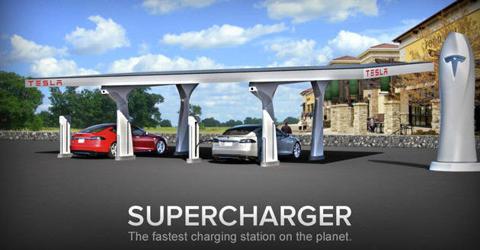
Tesla Supercharging Stations: Another Out-of-the-Box feature from Elon Musk firm. 

Now that 95% of this year Q1 data is available and looking at the business case of plug in cars, one can say that the only manufacturer making a profit with electric vehicles is Tesla, not only they are selling more than expected, the start up company is also selling each unit with a higher price than predicted, so the Q1 profit only comes as a natural consequence of that.

The rest of the market is trying not to lose much money in each unit sold, research and development costs are high, prices have to be realistic and the number of units sold are below expectations, with some CEO's discontent with these obstacles.

The truth is that it's a long hard road to electric profitability, but some are closer to than others, Nissan is now nearing 60.000 Leaf's sales (and let's not forget the additional 23.000 batteries sold by teammate Renault), allowing them to recover a good part of the investment and along with other measures, reduce the Leaf's price. Now with the production distributed by three factories, if (and that's a big "IF") they can produce some 2.000 units per factory, we are talking 6.000 units a month and 72.000/year, numbers that can put Nissan on the verge of  EV break even point by the end on 2014.

Will the tiny Spark make a difference on GM's electric strategy?

GM is also taking the same path thanks to the Volt project, but it's lagging behind Nissan, right now they are at 40.000 plus units of the Volt family and this year sales are below 2.000 units/month, as the increased competition dents on Volt sales.

GM has two ways to increase the investment recovery: A price reduction to increase sales (Still too early, maybe for the end of the year) or diversification with new models. With the Chevrolet Spark EV and the upcoming Cadillac ELR arriving this year, this looks to be the path followed by The General. If the ELR doesn't need to be a best seller, because of its premium price, for the Spark they will have to sell a lot of them for the model to be important to the GM EV strategy, and right now those large numbers seem rather questionable. For now the break even point for GM looks at least some three years away, maybe on the 2nd gen Volt...

As for Toyota, despite having sold more than 30.000 units of the Prius PHEV, they're not really that deep into plug-ins, regular hybrids are their (profitable) business and the PHEV version is just an extension of that program, so don't expect for Toyota to present new products in this segment, although putting a plug in a Prius Alpha/V/Plus shouldn't be much of an effort, right? (Wink, wink)