How To Resolve 'Exception Access Violation error in Windows' Issue on 7/8/10

If when you receive an Unhandled Exception Access Violation error when you run an application on your Windows 10/8/7 computer, it probably means that some part of the program code tried to access a protected memory address and was denied access.
How To Resolve 'Exception Access Violation error in Windows' Issue on 7/8/10

EXCEPTION ACCESS VIOLATION

If you receive this error, here are a few things you could try:
1] Disable Data Execution Prevention for that particular program
Data Execution Prevention or DEP is a security feature that can help prevent damage to your computer from viruses and other security threats. DEP can help protect your computer by monitoring programs to make sure they use system memory safely. If a program tries running (also known as executing) code from memory in an incorrect way, DEP closes the program. 


So if you trust the program that is throwing up this error, you may turn off Data Execution Prevention for this particular program and see if it works for you.
2] Run the Hardware Troubleshooter
Open Run box, type the following and hit Enter to open the Hardware & Devices Troubleshooter:
%systemroot%\system32\msdt.exe -id DeviceDiagnostic
The Hardware and Devices Troubleshooter will try to identify potential issues with your computer hardware and fix them if possible.
3] Reinstall the program
You may also want to consider the option of completely uninstalling the software that throws up this error when run, and reinstall it. Make sure that you download the latest version from its official home page.


Here Is The Surface Mini Microsoft Cancelled Just Before The Debut Of The Surface Pro

Over the last few years, as Microsoft’s Surface has grown more popular as a tablet device, we’ve heard occasional rumors about the development of a smaller sized model. Turns out Microsoft planned to announce a Surface Mini back in 2014, alongside the Surface Pro 3, but cancelled the product only days before its planned debut. Now we’re getting our first peek at the never-before-seen device thanks to a set of leaked photos.
iPhone 7, Self-Driving Teslas, Nod to Shop, 4-inch iPhone,, SoundCloud, Autopilot, Textalyzer, HaloLens, Snapchat Spectacles, Affordable Tesla, cars, mp3 converter, samsung galaxy s8, smart device, technology, technews, tech, google search, auto, weather, howto, data trick, data,


It seems Windows Central managed to sweet talk someone into getting some hands-on time with a prototype Surface Mini. The 8-inch device was even able to be powered on, revealing its specs included a Snapdragon 800 processor, 1GB of RAM, and 32GB of storage, while running Windows RT as its operating system.  


Just like how Apple’s iPad Mini resembles a shrunken version of the larger tablet, the Surface Mini borrows a number of features from its bigger sibling. This includes the kickstand from the full-sized Surface, as well as support for the Surface Pen stylus, with a little loop on the back to hold it. Unique, however, is the fabric-covered back, which gives the device more of a paper notepad-type look.


In hindsight, it’s easy to see that Microsoft made the right call in canceling the Surface Mini. In 2014, it was rapidly becoming clear that consumers were preferring larger smartphones over tablets with displays smaller than 10 inches. Even now Apple has seemingly abandoned its iPad Mini. There’s also the fact that manufacturers like Dell and Acer had already released poorly performing Windows tablets. All this adds up to the fact that the Surface Mini would have been a guaranteed dud when it landed.

SOURCE Windows Central


What To Do To Keep Your PC Dust Free and Clean

Have you ever cracked open someone’s PC only to be horrified at the amount of dust and debris that’s taken up residence inside? It’s not a pretty sight. Worse yet, dust buildup can hamper performance. In extreme cases, those dust bunnies that sneak into a PC can even damage a system’s hardware.
iPhone 7, Self-Driving Teslas, Nod to Shop, 4-inch iPhone,, SoundCloud, Autopilot, Textalyzer, HaloLens, Snapchat Spectacles, Affordable Tesla, cars, mp3 converter, samsung galaxy s8, smart device, technology, technews, tech, google search, auto, weather, howto, data trick, data,


A little bit of dust isn’t going to hurt things, but if left unchecked, a few particles eventually turn into a whole bunch of particles and before you know it, your heatsinks are caked with debris. This prevents precious airflow from reaching toasty components, like your GPU and CPU, which heat up faster and throttle more often. That’s not good. 


So what should you do? As the saying goes, an ounce of prevention is worth a pound of cure. Or if you prefer, the best offense is a good defense. Either way, the point is to prevent dust from entering into your system in the first place. The best way to do that is with dust filters.

Many modern cases ship with dust filters. If you’re in the market for a new enclosure, look for one that does, such as Fractal Design’s Define R5, NZXT’s S340 Elite, be quiet!’s Dark Base Pro 900, and so forth. There is no shortage of options, so shop around.

If your case doesn’t have fan filters, or doesn’t have enough of them, add them yourself. Magnetic air filters typically run about $8 to $10. The magnets are in the frame of the filter for easy installation, and no, you don’t have to worry about them destroying your data.


You can also make your own. Old pantyhose and nylon socks work well, and you can cut and stretch them to fit as needed. Whatever you use, just remember to clean them every now and then, otherwise the dust buildup on the outside will prevent cool air from entering your case.

If you smoke, avoiding lighting up inside your house, especially anywhere near your PC. The dirtiest looking systems tend to be those that are owned by smokers.

You should also keep your system elevated, if possible. The closer it is to the floor, the more it will collect debris that gets kicked up from foot traffic.

Finally, it’s a good idea to clean your PC on occasion. How often depends how quickly dust tends to accumulate. Pet owners, for example, may need to need to clean their systems more frequently, maybe every week or so, versus every month for others.


This doesn’t have to be a deep cleaning. A few strategically placed blasts of compressed air will do the trick. For best results, turn off and unplug your PC, and bring it outside. This way the dust won’t just settle back inside your house.

Be sure to hold the can of compressed air upright. If you tilt or shake it, the contents inside will turn to liquid, which you don’t want to spray all over your hardware. You can also give yourself freezer burn.

Finally, don’t use a vacuum. Static can build up on the plastic nozzle, which you don’t want discharging on your pricey parts.


Cheap Top-Rated Mechanical Keyboards Below $40 Listed Here

Mechanical keyboards are all the rage computer enthusiasts and gamers. If you’ve been using a rubber dome or scissor switch keyboard for your whole life, buying a new clicky keyboard might be intimidating, to say nothing of the considerable expense. Even the cheapest models from mainstream suppliers start at around $80, and go well into the hundreds for RGB lights and programmable extras—a lot of dough to drop on something you aren’t sure you’ll like. 

To that end, we’ve gathered a collection of dirt-cheap mechanical keyboard picks. These all come from relatively unknown brands with cheaper components than most of the enthusiast models, but they’ll give you a good place to start if you want to investigate the wider world of mechanical keyboards. Best of all, they’re each $40 or less, so trying them out won’t cost you much more than a standard keyboard. 


Why These Keyboards Are So Cheap

First, let’s temper your expectations just a little bit. These are, obviously, not as high quality as some more expensive keyboards—but we were surprised at how good they were. Some of it has to do with general build quality, but a big factor is the switches inside.
The individual key switches are what make mechanical keyboards unique: their complex spring-and-slider construction gives the keys a much longer, more satisfying “feel” than rubber dome keyboards, which is why they’re so coveted by typists and gamers. German corporation Cherry has been manufacturing its patented MX switches for over 30 years, and while they’re not the only switches that can be found in mechanical keyboards, they are the de facto standard.
Since the patent on Cherry MX switches expired, competitors have made “clone” switches that are generally sold to keyboard manufacturers for much less. These switches have the same basic characteristics as Cherry MX switches, including cross-shaped stems that are compatible with the same keycaps, and different colors corresponding to different switch types. The main difference: these clone switches are mass manufactured in China with (presumably) less strict tolerances gives them a looser, more shaky feel than the genuine article. That said, they’re very much preferred by bargain-hunters, since real Cherry MX switches or equivalents cost about a dollar per switch, instantly putting keyboards outside the range of an impulse purchase.
In addition, these keyboards tend to lack more advanced features like programmable RGB backlighting (or backlighting at all, in some cases), detachable USB cables, and other niceties like that. You may find one of those features occasionally, but you’ll rarely find them all on one board.
Cherry MX  switches come in different colors, each coded to quickly explain different variables of the switch itself: the strength of the spring, the “bump” or lack thereof at the point where a stroke is registered, and whether the key makes an audible “click” as it’s pressed. Other manufacturers have copied the color coordination scheme along with the Cherry MX switch design, so we’ve broken the recommendations below along those lines.

The Best Cheap Keyboard With “Blue” Switches: Redragon K552-M KUMARA

Blue switches are generally preferred by typists, thanks to a low actuation force and a loud “click” with each press of the key. It’s odd, then, that the Redragon board ($30) is explicitly aimed at “gamers,” who tend to prefer a linear switch for rapid key presses (see below). Nevertheless, this model is one of the cheapest on the market at just $30. More expensive models can be had with different flavors of LED lighting, but they’re all equipped with the same blue clicky switch. (The Amazon listing for the Redragon says that it uses “Cherry MX Green equivalent” key switches, but this appears to be a mistake—they’re definitely Blue clones.)
The switches themselves come from a company called Outemu, a common supplier of “clone” switches. Though the stems are a tiny bit more loose with a stiffer central spring than standard Cherry MX Blues, they give an acceptable approximation. The tenkeyless (also known as “TKL”) layout is plenty for most users who don’t do rapid data entry, but there’s also a full-size version with a number pad called the Redragon VARA ($40) for those who prefer it. Standard key sizes mean that aftermarket keycaps can be installed. The Redragon comes with a free plastic keycap tool for pulling them off, but the USB cable is fixed in place.


The board seems to have a bit of metal in the case (if not a full metal plate), which is something of a luxury at this price point, and gives it more heft and stability than other budget keyboards. The keycaps aren’t especially attractive, with standard ABS plastic and stamped legends that will wear down fast under constant typing. The case has a significant lip at the edges, which will make it harder to clean, but the Cherry-style stabilizers will save some headaches when swapping out longer keycaps. The Redragon board can be had with rainbow, all-red, or multicolor RGB lights for a bit more cash.
If you don’t like the look of the Redragon, you have a few other options with blue switches:
  • This Eagletec model ($40) is a bit larger, has a full metal plate, and (for a few more bucks) has options for blue LEDs or a fetching white-on-silver color scheme, with the same Outemu blue switches.
  • You can also grab this keyboard for $33, though and it’s available from a few different suppliers with their logos stamped onit: TOMOKO, Mpow, and Pictek. You can find full size versionstenkeyless versions, and backlit versions out there—just make sure you search all three brand names to cover all your bases.
  • If you prefer a smaller layout, the Qisan Magicforce (discussed in more detail below) is available in a blue switch variant for $40.
  • Another small alternative is the the DREVO 84 keyboard ($40), which includes white backlighting, doubleshot keycaps, and a choice of blue, brown, red, or black (like red, but stiffer) switches. Its non-standard layout will take some getting used to, though, and finding a full keycap set might be harder, so we don’t recommend it for beginners.

The Best Cheap Keyboard With “Brown” Switches (and a Small Form Factor): Qisan Magicforce Mini

Brown-style switches use a tactile bump to give physical feedback and a light spring like Blue switches, but without the distinct “click” sound. They’re a popular alternative, a sort of middle ground between the noisy blue switches and smoother linear designs. The Qisan Magicforce Mini ($40) is a great way to test them out, and it’s often recommend as a starting point by mechanical keyboard enthusiasts. (If you prefer gold, this version is the same price with a different color plate.)
Outemu Brown switches are pretty much spot-on replicas of Cherry or Gateron Browns, with a satisfying bump at a much lower volume than the Blues. The keycaps feel a bit flimsy and standard printing won’t last forever—a big drawback with some of the odd choices for volume and media keys on the function layer—but overall it’s hard to find a better small mechanical keyboard for just forty bucks.
The smaller format is well thought-out: it uses the popular 60% layout (dispensing with the function row) but adds back a full arrow cluster and the Delete, Insert, and Page Up/Down keys for less reliance on a function layer. You’ll still be wishing for a bigger keyboard if you often use F1-F12, but for everyone else, it’s an elegant compromise. A very thin aluminum plate doesn’t do much for stability, but the removable microUSB cable, small size, and light weight make this one handy for travelling. And like the Outemu switches above, the ones in this keyboard also come with Cherry-style stabilizers for easy keycap swaps, with a keycap tool included in the box.
There are Magicforce keyboards with backlighting, as well as full-size variants, but they’re much more expensive, running around $70. You can also get the smaller versions with blue or red switches at the same $40 price point, if you prefer those. But for other cheap brown-switched boards, there are a few others available:
  • If need a keyboard with shiny LEDs, the Velocifire TKL01 ($30) will give them to you with “Brown” switches and a slightly larger build.
  • A good compromise between them is the TKL78 ($30), also from Velocifire, which uses a “75%” layout with a full function row, but a shorter layout with the arrow cluster crammed into the right modifier area.
  • The DREVO 84 keyboard ($40) includes white backlighting, doubleshot keycaps, and a choice of blue, brown, red, or black (like red, but stiffer) switches. Its non-standard layout will take some getting used to, though, and finding a full keycap set might be harder, so we don’t recommend it for beginners.

The Best Cheap Keyboard With “Red” Switches: LESHP Backlit Keyboard

“Red” switches are the most common among keyboards specifically designed for gaming, because they combine a relatively light spring with a linear slide action. There’s neither a tactile bump nor an audible “click” when pressing down on the key, it’s just smooth motion up and down. Red-style clone switches are especially hard to find in cheaper boards, though, which tend to go with brown or blue switches for broader appeal. Thankfully, the oddly-named LESHP keyboard includes them for just $40.
The LESHP board is aesthetically the least pleasing of our three recommendations: though the build is light plastic throughout with exposed screws, the black case is clearly trying to ape the Razer BlackWidow design. That comparison isn’t helped by the “rainbow” LEDs, which, despite their appearance, are not true RGB—each row only lights up one color (though an all-red version is available). At least the keycaps are doubleshot ABS plastic, meaning the backlit legends won’t wear out with use. The media legends and lighting function controls are merely printed, but they’re on non-alphanumeric keys, meaning they’ll probably last a while.
LESHP does include a full-sized layout, and while the six-foot cable isn’t removable, it’s braided for extra toughness. The key switches themselves are from a company called “JWH,” and are quite loose compared to genuine Cherry keys, though that’s not necessarily a bad thing on a gaming design. The backlighting is pretty dim even at the brightest setting, but the layout is completely standard (not always a given on a gaming keyboard) and Cherry-style stabilizers mean easy keycap replacements.
If the multicolored LESHP doesn’t strike your fancy, you might like these alternatives:
  • The smaller DREVO 84 keyboard ($40) includes white backlighting, doubleshot keycaps, and a choice of blue, brown, red, or black (like red, but stiffer) switches. Its non-standard layout will take some getting used to, though, and finding a full keycap set might be harder, so we don’t recommend it for beginners.
  • DREVO also sells a more conventional tenkeyless board in the same style, but only with the stiffer black key switches, for $37.

Low-Cost Upgrades for Your New Cheap Keyboard

If you’ve tried out the mechanical lifestyle and decided you’re a fan, you can go out and spend more money on a board with more features, like programmable layouts, custom designs, RGB lighting, and so on. But you can also upgrade the board you already have, keeping your total cost low but getting a nicer-looking board.
  • Add new keycaps: all the recommended boards above use standard Cherry-style stems and standard key layouts, so any set of replacement keys will work with them. You can get a new matching set fairly cheaply, or upgrade them with thicker PBT plastic, or even try a different profile like DSA or G20 for a different feel on your fingers.
  • Create custom keycaps: for the ultimate in keyboard customization, there are a few vendors who will let you choose the color and printing style on individual keycaps, or even upload your own artwork for custom printing (like I did with my Overwatch set pictured above). WASD Keyboards and MaxKeyboard are two options.
  • Remove ugly logos: sometimes the branding on these cheap boards is…less than stylish. There are a few options if the logo printed on the case isn’t to your liking, it’s possible to remove them from plastic with a little rubbing alcohol, sugar cubes, or acetone. Just make sure to test each method on the back of the keyboard before you go rubbing away at the logo—strong stuff like acetone especially can ruin some cheaper finishes.
  • Quiet your keyboard with O-rings: if the noise of your mechanical keyboard is bothering you (or your coworkers), these tiny plastic rings can help dampen the sound. They’re especially useful if you’re forceful typist who bottoms out the keys with every press.
  • Get a protective carrying case: some people enjoy their mechanical keyboards so much that they take it along with their laptop to type with it on the go. There are sleeves made specifically to protect the keys and case of your keyboard inside a laptop bag or backpack. Just check the dimensions to make sure it’s big enough for your keyboard.
With the right upgrades, you’ll be living the keyboard high life without the high cost.


Get MacOS High Sierra Working On Your Mac Right Now: How To Get It?

The next version of MacOS is official.

While at WWDC 2017, Apple announced and previewed MacOS High Sierra, a major update to the MacOS Sierra operating system that released last year for Macs. It includes many behind-the-scene upgrades that will make your Mac seem more powerful, more secure, and faster. For instance, it will allow for VR and AR content.


But you don't have to wait until autumn to try all these new features. Apple just opened the High Sierra public beta program, marking yet another time the company has allowed anyone to download and run a major pre-release version of its desktop OS before a formal release. It also just opened the iOS 11 public beta program for iPhone and iPad users. 


If you want to get MacOS High Sierra up and running on your Mac now, I have detailed everything you need to know below.


How can you get MacOS High Sierra public beta?

  • With the public beta program, you can download and install MacOS to your Mac. It doesn't require a paid developer account. It's free.
  • Visit the Apple Beta Program website, and hit the sign up button.
  • You'll then need to sign in with your Apple ID login credentials.
  • From there, read and accept Apple's agreement.
  • On the Mac, you’ll be taken to Apple's Guide for Public Betas website, where you'll click the "Enroll Your Devices" link at the top of the page.
  • On the Enroll Your Devices website, you’ll see instructions to back up your computer using Time Machine.
  • You’ll also see a section called “Install the MacOS High Sierra public beta". Here, you’ll find a redemption code. Click the Redeem Code button.
  • The App Store will launch.
  • Enter your Apple ID password to download the installer.
  • You'll also get an email inviting you to download the MacOS High Sierra beta.  

Should you test the MacOS High Sierra public beta?
The High Sierra public beta is not the final, stable version intended for all consumers. The final version will release this autumn. As for the public beta version, it might include several bugs that have yet to be discovered or fixed. You should therefore only download and install the beta on a machine that's not your primary computer. And always back up your data and files first (see Apple's support page).


How do you provide feedback to Apple?
The OS X and iOS public betas come with a Feedback Assistant app, which can be opened from the second page of the Home screen on your iOS device or from the Dock on your Mac. You can learn more about the app here. The app is also available from the Help menu of any app.

Huawei MateBook Having Windows 10 OS is Now Available For Pre-order in Less Than 24hours

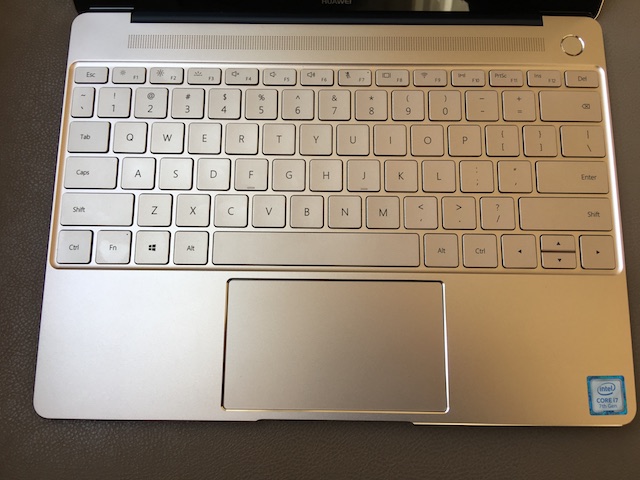
My favorite Windows 10 device of 2016 was the Huawei MateBook. Much like the Surface Pro, it is a tablet that can become a laptop with an optional keyboard purchase. While it was less powerful than Microsoft's offering, it was also less expensive. For basic needs, such as web surfing and word processing it was an absolutely fabulous value. Despite the meager internal specs, Huawei made the device feel premium with a beautiful outward design and the addition of USB-C (something no Surface has).
Huawei MateBook Having Windows 10 OS Are Now Available For Pre-order in Less Than 24hours

Last month, Huawei announced that it would expand the MateBook line beyond a single tablet to a total of three distinct machines -- MateBook X, MateBook E, and MateBook D. The "E" variant is the successor to the aforementioned tablet (which now comes with the keyboard), while the X and D are traditional 13 and 15.6-inch laptops, respectively. Sadly, exact availability and pricing for the USA was unknown. Today this changes, as Huawei not only reveals cost and pre-order date, but configuration options too. 


"Since we unveiled the new MateBooks in May, we've received positive feedback about our PC designs, portability and build quality. We are excited to expand our device lineup in the U.S. with the addition of the latest MateBooks. We pushed the limits of what's possible to deliver all-in-one devices that could do everything customers need, seamlessly -- from sun up to sun down. Creating the best user experiences that result in long-term customer satisfaction is our priority," says Robin Zhu, President, Huawei Device USA.
Huawei-2017-2
The company shares the following configurations that will be available in the USA. They will be sold at both Newegg and Amazon.
HUAWEI MateBook X
  • 7th Generation Intel Core i5 8+256GB Space Gray: $1,099.99
  • 7th Generation Intel Core i7 8+512GB Prestige Gold: $1,299.99
HUAWEI MateBook E
  • 7th Generation Intel Core m3 4+128GB Titanium Gray: $799.99
  • 7th Generation Intel Core i5 8+256GB Champagne Gold: $999.99
HUAWEI MateBook D
  • 7th Generation Intel Core i5 8+1T Champagne Gold: $699.99
Unfortunately, the configurations are a bit limited. There is only one option for the MateBook D, while with the other models, you might have to choose between the color you want and the specs you need. For example, if you want a Space Gray MateBook X with a Core i7, you are out of luck -- that CPU is a Prestige Gold-only affair. With that said, all the colors look nice, so you really can't go wrong.
Which MateBook will you pre-order tomorrow? Tell me in the comments below.


Best Free Windows 7/8/10 File Manager software

File Manager software offer an easy and convenient way to modify file attributes. Windows has its own file manager – File Explorer. It is designed to simplify file management activities in Windows. Although fine, Windows Explorer doesn’t offer tabs, a dual-pane interface, batch file renaming tools, and other advanced features. 
Best Free Windows 7/8/10 File Manager software


This necessitates the use of File Explorer alternatives for your computer-based life. Fortunately, there’s no shortage of File Explorer replacements that do the same job much better than Explorer itself. Below, you can find the list of free File Manager software for Windows 10/8/7 which include Shallot, Tablacus, XYplorer, FreeCommander, Unreal Commander, Multi-commander, Konverter and FileVoyager.


Free File Manager software for Windows

If you aren’t quite sure about which program is best for you, we’ll help you make the right choice with these alternatives and features they support.
Apart from allowing usual file operations like renaming, copying, moving, linking, deleting and recycling files, the tool features a dual pane layout. It makes the transfer operations of files or folders between sources and destinations easier and hassles free.
The portable version of File Voyager supports numerous shortcuts to default folders, such as Documents, Libraries, and Desktop. Moreover, you can easily access the file compressing tool or fax or email the selected document by creating shortcuts. You can also view the file/folder size near each entry and edit the items in notepad.
FileVoyager enables browsing in various modes like report or thumbnail modes and has an extensive collection of tools.
The freeware ships with an impressive set of features and has been designed to co-exist with Windows Explorer/ File Explorer. This means it does not interfere with the default file manager in any way. Similar to FileVoyager, Konverter displays data in two panels. A built-in file conversion tool supports many file formats. For instance, there’s support for 2,034 image file types, 795 audi, 230 video, 102 3D files. Besides, there’s a vast number of extras which make the tool a very capable program.
In all, Konverter is a fast and reliable program with a shallow learning curve. This ability of the program gives its users all levels of expertise required to process and alter files quickly and efficiently.


Multi-Commander comes across as one of the best alternatives to the standard File Explorer. It features an extensive number of tools and plug-ins to help users manage their files and folders.
The program houses a number of buttons, all of which are highly customizable. Plus, there are drive shortcuts for opening specific types of files and accessing the HKEY_CURRENT_USER branch of the Registry.
It is a dual-pane file manager designed to overcome shortfalls of the traditional Windows File Explorer and offer a more convenient way to have control over files and folders. the program comes pre-loaded with a set of useful features and options, like:
  1. Directory synchronization –  Offers capability to open archives with popular formats (ZIP, RAR, ACE, TAR and CAB)
  2. Multi-rename tool – Allows renaming multiple files simultaneously, once the naming pattern with rules has been defined
  3. FTP connection – Allows rapid uploading of files to a FTP server.
The tool advertises itself as an easy-to-use alternative to the standard Windows file manager. Similar to other programs mentioned above, Free Commander helps you undertake all of your daily activities in Windows with convenience.
It has a built-in file viewer to view files in hex, binary, text or image format. With this tool, you can set your own keyboard shortcuts and menu buttons for easier navigation. A simple right click on a folder or file displays the traditional Windows Context Menu.
XYplorer takes basic and familiar features of File Explorer a notch higher. It has multilingual support. The program avoids any entry in the Registry or system folders, allowing you to use it as portable application alongside Explorer. Another unique feature of the tool – it allows users to colour-code their tabs for easier identification.
Apart from the above, XYplorer runs powerful file search, multi-level undo or redo, branch view, folder view settings, batch
  1. Powerful file search
  2. Multi-level undo or redo
  3. Branch view
  4. Folder view settings
  5. Batch rename
  6. Color filters
  7. Directory Print
  8. File tags.
This tool does not require any installation as it is available in a portable version. Tablacus, basically adds new features to the layout of File Explorer so that you find it easier to search files.
Its design is heavily inspired fromFile Explorer but makes some necessary changes needed in the file manager. The most obvious being tabs so that a user does not require dozen explorer windows to be opened at once.
Shallot makes possible to customize the interface and configure behavior and options of a file manager as per your liking. This flexible manager comes with a plugin interface that adds a wealth of convenient features and versatility. The freeware program supports built-in plugins as long as they are written in Python. As such, you can create your own plugins to automate a few file management tasks.
For a free and easy way to manage the files on your system, give Shallot, a try!
Which one would you recommend?


Toshiba's QLC Flash Memory Gives Birth To Cheaper High Capacity SSDs

Toshiba has developed what it claims is the world's first quadruple-level cell (QLC) 3D NAND flash memory with a stacked cell structure. While that is exciting for Toshiba from a technical standpoint, the upshot for consumers is higher capacity solid state drives at mainstream price levels.
iPhone 7, Self-Driving Teslas, Nod to Shop, 4-inch iPhone,, SoundCloud, Autopilot, Textalyzer, HaloLens, Snapchat Spectacles, Affordable Tesla, cars, mp3 converter, samsung galaxy s8, smart device, technology, technews, tech, google search, auto, weather, howto, data trick, data,


That also means mainstream performance, as is typically the case with SSDs that use triple-level cell (TLC) NAND flash memory. TLC drives usually suffer from inferior write performance, and we suspect that will be the case with QLC-based SSDs, only more so.


The path to QLC was inevitable, though not necessarily easy. Multi-bit flash memory chips store data by managing the number of electrons (the charge) in each individual memory cell. Bumping things up to 4-bit-per-cell (QLC) presented Toshiba with some technical challenges, as increasing the number of bit-per-cell by one requires twice the accuracy of TLC memory. SLC NAND only tracks two voltage states, MLC (2-bits per cell) tracks four voltage states, TLC has eight voltage states, and now QLC has 16 voltage states.

So how did Toshiba work around this? In vague terms, Toshiba said it drew on its advanced circuit design capabilities and 64-layer 3D flash memory process technology to create QLC 3D flash memory. The end result is a prototype that features the world's highest die capacity with that memory process.

Looking ahead, Toshiba says that QLC 3D flash memory will enable 1.5TB SSDs with a 16-die stacked architecture in a single package. At what price point remains to be seen.


"From SLC to MLC and MLC to TLC, large technology shifts are often met by industry resistance and the introduction of QLC is no exception," noted Scott Nelson, senior vice president of TAEC's memory business unit. "There will always be demand for compelling storage solutions that bring higher densities and produce a favorable cost/performance equation—our QLC technology falls squarely into that sweet spot."

Toshiba plans to demonstrate a 1.5TB SSD based on QLC memory during the Flash Memory Summit in Santa Clara, California this August. Hopefully that means we will see consumer solutions by the end of the year.