New Ferrari F8 Tributo | Review, Specs and Videos


Back in 2015, the Ferrari 488 GTB made its debut at the Geneva Motor Show – stepping in as a worthy replacement for the classic 458 Italia.
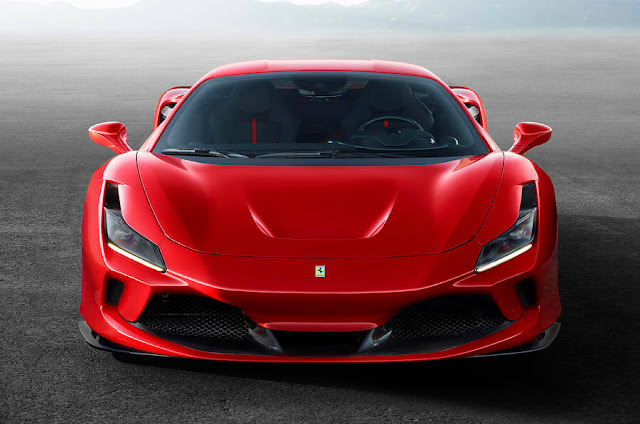
Ferrari F8 Tributo

A lot has happened since then: Trump became president, the UK voted to leave the EU, and now – less controversially – the new Ferrari F8 Tributo has been revealed as the replacement for the 488 GTB.  

The GTB impressed across the board, but it has now paid its dues and its successor – the Ferrari F8 Tributo – is faster, more powerful, and has an increased aerodynamic efficiency.

The stunning F8 Tributo packs Ferrari’s most powerful V8 ever created, contrary to predictions by some enthusiasts that suggested it would be a hybrid.

Ferrari bosses are also claiming that the F8 is the first of a ‘new design language’, which the legendary manufacturer hopes will epitomise the aerodynamic brilliance and extreme performance that they seek.

At first glance, this new supercar seems the ultimate package – so perhaps the McLaren 720S has a genuine rival on its hands?


Ferrari F8 Tributo Stats and Specs

Ferrari F8 Tributo 1/3 side view
Credit: Ferrari

Ferrari
claim that the F8 Tributo is one of the fastest, most thrilling, and most communicative supercars ever – a pretty bold statement to make.

But it’s not an outrageous one; the F8 is certainly there or thereabouts, and its performance figures only help justify Ferrari’s belief in the newest member of its family.

Ferrari F8 Tributo Engine 

Ferrari F8 Tributo engine
Credit: Ferrari
The F8 has the same twin-turbo 3.9-litre V8 that powered the 488 Pista, which happens to have won three consecutive International Engine of the Year Awards and was named the best engine of the last 20 years in 2018. 

Officially listed as the most powerful V8 engine ever created by the company, the F8 Tributo’s engine is a serious piece of kit. 

It generates 710bhp (matching the 720S) and 568lb-ft of torque, performing just as well as the hard-core Pista and improving on that of its predecessor – the 488 GTB – by 50bhp and 7lb-ft.

Some experts have hinted at the possibility of the F8 Tributo being the end of an era – with Ferrari pledging to push the development of the hybridisation and electrification of their vehicles.

How Fast is the Ferrari F8 Tributo?

Ferrari wants to create an enthralling driving experience for its customers, and it does so here with the F8 Tributo reaching 0-62mph in just 2.9 seconds – 0.1s less than the 488 GTB – and setting a 0-124mph time of just 7.8 seconds.
View of the Ferrari F8 Tributo from above
Credit: Ferrari

The F8 Tributo’s top speed also matches the Pista, maxing out at an impressive 211mph, increasing by 6mph in comparison to the 488 GTB.

That’s a faster top speed than the McLaren 600LT, the Huracán Evo and even the McLaren Senna!

Ferrari claims that this level of performance is achieved with absolutely no turbo lag – a feature we’re sure its lucky drivers will appreciate.

Not only is Ferrari’s latest model more powerful than the supercar it’s succeeding, but it’s also far lighter – weighing in at just 2,932lbs with all lightweight options included, cutting around 88lbs in total.

Ferrari F8 Tributo Aerodynamics


The Ferrari F8 Tributo’s body has been restyled and includes a new aero pack – developing features of various past models to generate state-of-the-art aero solutions which give this new F8 a boost of over 10% in terms of its aerodynamic efficiency compared to the 488 GTB.

The redesigned front S-Duct derives from the Ferrari F1 and works to produce an efficient vertical load at a rate that adds 15% to the downforce of the regular 488.

Other aerodynamic features of the F8 include:
  • A new blown rear spoiler (wider and more inclined to increase vertical load)
  • Rear flux deflectors (to reduce drag)
  • Upwashing spoiler suction (to increase vertical load)
  • A flat underbody with a new front diffuser (increasing brake cooling efficiency)
  • A rear diffuser with active aero (to maximise performance in corners and straights)

There is also a new air intake layout, deriving from the 488 Challenge, which supports the increase in power by reducing the temperature of the air that enters the engine.

There’s a LOT going on here in terms of the F8 Tributo’s aerodynamics. The body may look sleeker than ever, but almost all of its features serve a genuine purpose as Ferrari’s newly released videos demonstrate.

Design and Interior of the F8 Tributo

Overall, the F8 Tributo is one of Ferrari’s best looking supercars, especially in the iconic Rosso Scuderia colour that we’ve come to expect from the manufacturer.

Although Ferrari clearly had a vision to improve the aerodynamic efficiency of the car, the F8 Tributo sacrifices none of its beauty while doing so. 

A prominent design feature is the new, slimmer LED headlights, which have decreased in size to make room for brake cooling ducts and improve the airflow around the front. And as you can see, they also look pretty cool.

The rear of the F8 is also pleasing on the eye, with a louvered Lexan engine cover added – reminiscent of the iconic F40 – to remove hot air from the bay but also to contribute to the aesthetics of the vehicle.

Rear view of the F8 Tributo
Credit: Ferrari

A New Interior?

Much of the interior remains unchanged, but there are redesigned elements within the cockpit accommodating round air vents, a new steering wheel design, new controls and a new seven-inch passenger touchscreen display – not that you’ll be able to lean forward to use it while you’re hitting those top speeds.

Also, the diameter of the steering wheel has decreased in comparison to the 488 GTB, creating a far sportier feel behind the wheel.  

Ferrari's Hybrid Future

The Ferrari F8 Tributo’s cost has not yet been announced, but it was showcased as a fitting 488 GTB replacement at the Geneva Motor Show in both Rosso Scuderia and Blu Corsa finishes.

Ferrari F8 Tributo at Geneva Motor Show
Credit: Ferrari

Ferrari was spotted testing a hybrid model prior to the show, which led to suggestions of a hybrid supercar being revealed – which, as we know, wasn’t the case. However, Ferrari CEO Louis Calmieri has recently confirmed that a brand new, track-focused hybrid model will arrive in the next two or three months.

Rather than a brand new car, many see the F8 Tributo as an upgraded 488 GTB, and rightfully so. It may only be a development of its predecessor, but it’s certainly an excellent one at that.

For now, at least, let’s appreciate Ferrari’s achievement in producing such a beautiful supercar with admirable performance figures and a vastly improved aerodynamic efficiency.

For the latest supercar news and reviews, be sure to stay up to date with our Facebook and Instagram pages! 

New Lamborghini Huracán Evo | Specs, Design and Price


The first official images and details of the new Lamborghini Huracán Evo have been released ahead of its public reveal at the Geneva motor show later this year, introducing a more powerful, aerodynamic and technologically advanced upgrade.

Its sharp, edgy and angry-looking design is typically Lambo-esque, maintaining a grip on the company’s traditionally unique design.

Aesthetically, the Evo looks more aggressive than the previous Huracán, and the good news is that its performance matches its appearance.

The Huracán has previously been labelled as Lambo’s ‘baby supercar’, but the model seems to have come of age through this revamped Evo version.

With the same engine as the powerful  Lamborghini Huracán Performante, and with design upgrades giving the car an added maturity, the Evo seems more than ready to challenge the likes of the McLaren 570S.

Here, we outline the Huracán Evo’s cost, design, specs and much more!

Lambo Huracan Evo: The Feel

Lamborghini have claimed that their new Huracán Evo has been designed to amplify your daily routine – essentially making your every-day life better.

They do not want to alter your daily routine massively, but to improve and evolve it to become a refined version of the past. 

Similarly to what they have done with the Evo, which is an enhanced, upgraded form of the original 2014 Huracán.

The Huracán Evo’s smooth feel is largely influenced by its ability to anticipate the driver’s needs, implementing a new ‘feed-forward’ method rather than the familiar feedback system.

It is able to provide such an intimate driver-vehicle connection due to state-of-the-art control systems and displays which manage the car and allow the Evo to use its surroundings and the driver’s input to create the ultimate driving experience.

The Huracán Evo also utilises four-wheel drive, which further enhances the quality of the handling and performance.

What Does the New Huracan Evo Look Like?

In terms of the exterior, Lamborghini have not made many radical changes to the original iconic shape, but there are a few more tweaks and enhancements in order to augment aerodynamics and performance. 

The Huracán Evo remains in touch with the universally recognisable Lambo stamp, being noticeably low, with a razor-sharp body.

The Y-shaped front bumper is distinctive and the bonnet lines are akin to the classic Lamborghini Countach, whereas the skirt air ducts are similar to those of the Murciélago.  

The Huracán Evo’s race-car-like exhaust has been repositioned upwards to sit almost centrally at the rear of the supercar, much like the highest performing Lamborghini models.


The new Evo pays homage to the manufacturer’s racing routes, but is not to be confused with the Lamborghini Huracán Super Trofeo Evo – which began production in 2018 as a competitive race-car. 

However, the raised exhaust increases airflow, thus improving the car’s aerodynamics and downforce by a substantial amount.

The Aerodynamics

With the exhausts being shifted upwards, Lamborghini claim that they have successfully managed to improve the aero by five times of that achieved by the first generation Huracán.

How do they achieve such impressive aerodynamics?

An upgraded front bumper manipulates the airflow, ushering the air through a front splitter with an integrated wing, thus creating a double airway beneath the body, while the improved flaps allow additional aerodynamic load. 

The outcome is an increased downforce, pressing the vehicle towards the ground for a smoother and crisper drive.

For a first-hand look at all the design features of the Huracán Evo, and for a bit of entertainment, be sure to check out Lamborghini’s configurator

The New Evo's Interior

Whereas the exterior was tweaked with certain features, the interior of the new Huracán Evo has seen major updates including significant technological advances and new, innovative material options.

How the inside of the car looks depends largely on the owner’s taste, with three different options available for the interior materials.

Its indoor features are inspired by traditionally Italian design, with all options offering materials of the highest quality.

The three materials available for the interior are:
  • Leather
  • Alcantara
  • Carbon Skin
Carbon Skin is an exclusive, Carbon Fibre material that has been developed especially for Lamborghini.

The technological advances are what really set the Evo apart from its previous version though, with highly complex advances being made to how the car is run.

Technology Advances 

Despite the Huracán Evo not necessarily changing massively on the outside, there’s more to the Evo than meets the eye.

The Lamborghini Integrated Vehicle Dynamics (LDVI) system is the so-called ‘brain’ of the Huracán Evo, and is the complex processor behind the car’s ground-breaking ability to anticipate rather than react to the driver’s commands.

It uses the driver’s input, the selected driving mode and the external environment to predict the driver’s wishes. 

This technology represents a shift from the traditional ‘feedback’ logic, to a safer, smoother ‘feed-forward’ one.

Lamborghini have pushed the boundaries of its technology systems, as visually demonstrated by the new Human-Machine Interface – the HMI. It may not have been creatively named, but what it does is certainly impressive.

Traditional, and now somewhat archaic, buttons have been removed in place for the 8.4-inch multi-touch screen display – the HMI. 

The screen allows you to control almost everything, from the entertainment to the highly sophisticated driving dynamics. It also has Apple CarPlay and Android Auto installed, which is pretty a cool quirk. 

Live traffic alerts will also display here, and you are able to use the HMI to adjust the lights inside the cockpit as you please.

A telemetry system is also in place, featuring two new communicating cameras in order to improve the quality – as well as safety – of the overall drive. 

Huracan Evo Specs and Performance

The new Huracán Evo boasts the same 5204cc naturally aspirated V10 engine as its powerful relative, the Performante.

Both therefore share a number of identical performance figures, hitting 631bhp at 8,000rpm, 442lb ft of torque at 6,500rpm.

That works out as an improvement of 30bhp and 29lbs better than the old Huracán LP-610.

The upgraded Huracán Evo hits a top speed of over 325km/h (202mph), which is an increase of at least 6km/h (3.7mph) on that of the Huracán LP580-2 Coupé and the same as the LP610-4 Coupé.

The supercar also set great times of 0-100km/h (0-62mph) in 2.9 seconds, and 0-200km/h (124mph) in 9 seconds flat, identically matching the Huracán Performante to 100km/h and a mere 0.1 seconds slower to 200km/h. 

Lambo have pumped money into the development of futuristic Magnetorheological suspension, which intelligently uses electromagnetic currents to smooth the bumps and cracks on the road.

With such technology working alongside the LDVI and V10 engine, it comes to no surprise that the Evo knows its way around the track.

There are plenty of driving settings to experiment with in your spare time or on the track, including the Strada, Sports and Corsa modes.

Drive is sent to all four wheels through a seven-speed twin-clutch gearbox, which is where things get pretty intricate.

The Huracan Evo's Four-Wheel Steering

Lamborghini have utilised a combination of the active front steering system and the rear steering system in order to provide optimum control under all circumstances.

Equipped with an EPS (Electronic Power Steering) system, the Evo is able to adjust its handling to ensure that the driver receives the most comfortable experience when behind the wheel. 

That’s not the only fancy steering system it possesses, with the LDC (Lamborghini Dynamic Steering) programme also on board.

The LDC supports the EPS by dynamically offering a variation of the steering ratio, once again adjusting to the driving circumstances.

The high-tech systems manage the Huracán’s four-wheel steering (also known as all-wheel drive) in order to cater to the driving mode selected, offering a fluid and efficient drive.

How Much Does the New Lamborghini Huracan Cost?

The new Huracán Evo is expected to be up for sale at the price of $261,274 in the USA, and £206,000 in the UK. 

A relatively modest price for a Lamborghini, but the Evo still costs around $60k more than the McLaren 570S and is even more expensive than the masterpiece that is the 2018 McLaren 600LT – which itself is $240,000 (£185,500).


Its price has increased slightly in comparison to the original Huracán, which was sold at around $250,000 (£190,000) when it first hit the road. 

Regardless, it is around $13,000 cheaper than the Huracán Performante, which is essentially an Evo with a rear wing and the active aero features.

As far as supercars go, it is far from an extortionate price for its customers, with the legendary Aventador starting at $393,695 in the USA (£271,146 in the UK), over $100,000 more expensive than the Evo.

How Does the Huracan Evo Compare to Other Lamborghinis?

It may be missing the more advanced adaptive aerodynamic package, but the new Evo possesses a number of similarities to the Performante, including similar wheels, optimised intakes, an improved under-body and raised exhausts.

Sharing almost identical performance figures, we expect many supercar drivers to favour the Evo over the more expensive Performante. 

Against its original 2014 version, the Huracán Evo has evolved and upgraded to become a more efficient, aerodynamic and quite possibly better-looking supercar. 

Lambo have claimed an incredible 500% improvement on the downforce of the original Huracán, making the Evo a far more aerodynamically efficient monster this time around.

The main difference, as you may have gathered, is its interior technology, which impacts and essentially controls what we see on the exterior.

Despite some performance and aesthetic dissimilarities, the computer control systems are the primary difference, with the Evo far outweighing the 2014 model on the tech front. 

Our Summary of the Huracan Evo 

With its highly complex control systems and technology far too sophisticated for most of us to really comprehend, this Huracán Evo may not get the credit it deserves until you dive deeper into what’s really going on under the bonnet.

For a reasonable price amongst its competitors, the new Evo offers a modern, stylish and exhilarating upgrade to the already-popular 2014 Huracán.

At first sight, it is mean-looking, aggressive and sharp, exactly what we have come to expect from one of the most easily recognisable manufacturers in the world.

Lamborghini’s design features are always going to turn heads, and what’s great about the Evo is that it can perform on the track as well as the road.

Matching its more expensive sibling – the Performante – for speed, the Evo will undoubtedly be a favourite among many supercar fanatics. It has certainly impressed us!

The original Huracán was not perfect, and this facelift is exactly what was needed.

Its performance has improved, its exterior is more appealing, and its interior systems have seen remarkable upgrades. 

Head to our brand new Facebook page for exclusive images, reviews and all the news from the supercar world! While you're here, why not check out our first exclusive gallery of a super rare Koenigsegg CCXR Edition?

Mercedes AMG GTR | Review, Specifications, Price and Competitors

2018 Mercedes AMG GT-R Review


Overview

Superior performance, exquisite style, cutting-edge technology... This is what comes to our mind whenever we hear Mercedes. And once again, we are right with the 2018 Mercedes AMG GT-R. A supercar which has all the latest technology and luxury has but at the same time, a lot of raw power to push back to your seat. In fact, Mercedes-AMG has never put so much motorsport technology in a production car before. 

The new Mercedes AMG GT-R is the latest addition to the GT series. The first Mercedes AMG GT was released back in 2014 followed by the Mercedes AMG GT-C. The Mercedes AMG GT replaced its predecessor the Mercedes SLS AMG, produced from 2010 to 2014. 

The new Mercedes AMG GT-R has better aerodynamics and downforce compared to the AMG GT and AMG GT-C. The front fender is also a completely new one (more of that in the designs section below).

Mercedes AMG GT-R Specifications


Specifications

Designs

The Mercedes AMG GT-R's design is from the original AMG GT but with some updates to it. The lightweight high-strength aluminium body makes the GT-R agiler on the road as well as around the corners. The fixed carbon fibre rear spoiler helps in the aerodynamics of the car, eliminating unnecessary lifts during acceleration. There are two types of carbon fibre package which you can choose from when ordering your GT-R. Active air intakes on the sides of the car, on the front and back also improves the active aerodynamics of the car. Apart from the sleek body, the new AMG Panamericana grille strikes the most attention. The 15 chrome-plated vertical fins definitely make the car look more aggressive and menacing. The car is often referred to as 'The Beast of The Green Hell' as it has spent most of its development time in the 'Green Hell' of the Nürburgring racetrack and it has conquered the track with ease.


Mercedes AMG GT-R Top Speed


Engine

Under the hood of the Mercedes AMG GT-R is a 4.0L Biturbo V8 (3982cc) producing 577 horsepower at 6250 rpm and 516 lb-ft of torque at 5500 rpm. Its power is slightly more than the AMG GT and the AMG GT-C. The rear wheel drive (RWD) AMG GT-R has a seven-speed AMG Speedshift DCT. The car will do 0-60 mph in just 3.5 seconds and a quarter mile in 11.2 seconds.  The beast makes use of electronic steering actuators to move each wheel independently up to 1.5 degrees in each direction. The Mercedes AMG GT-R has a top speed of 198 mph.

Mercedes AMG GT-R Horsepower


Fuel Consumption

Apart from being a supercar and a luxury car at the same time, the Mercedes AMG GT-R is also good at fuel consumption. In the city, the car will do 15 miles per gallon and on the highway, it should usually do 20 miles per gallon. These figures look very good, considering the AMG GT-R to be a luxury car for the racetrack with a big V8 under the hood.  

Interior

Inside the Mercedes AMG GT-R, there is no compromise on luxury or technology. You will find leather, Alcantara and carbon fibre mostly everywhere. There is no cheap plastic anywhere at all. The car is packed with a lot of technology, from collision prevention assist plus to heated power folding mirrors with logo projectors (optional), the AMG GT-R has it all. Even though it is a two-seater supercar, it has a surprisingly high amount of airbags, eight in total. The car is equipped with the AMG Drive unit with E-select. You can control virtually everything on the 8.4-inch display with the touchpad controller in the centre console. The AMG GT-R is primarily equipped with a lightweight 4-speaker sound system but you can upgrade that to a Burmester High-End sound system.

The Mercedes AMG GT-R also comes with attention assist, LED daytime running lights, adaptive highbeam assist, Parktronic, rearview camera, adaptive braking, ABS, brake Assist (BAS), Electronic Stability Program (ESP), Smartkey, Distronic plus (optional), blind spot assist (optional), included in the base price.

Let's take a moment to look at the cargo space of the car. The AMG GT-R has a 10.1 cu ft of trunk capacity, bear in mind that it is a supercar. 

Mercedes AMG GT-R Interior


Price

The Mercedes AMG-GTR price starts at $157,000 (MSRP*). Personally, I think the Mercedes AMG GT-R is a great bargain for that price. Let's wait and see how much I will be worth after some years. 

Mercedes AMG GT-R Price

Competitors

2018 Porsche 911 GT3 

2018 Mercedes AMG GT-R competitor 2018 Porsche 911 GT3


The best competitor to the Mercedes AMG GT-R is none other than the Porsche 911 GT3. A lightweight supercar which is very nimble around corners and on the racetrack. It has a 4.0L direct fuel injection (DFI) flat-six producing 500 hp at 8250 rpm and  339 lb-ft of torque. The GT3 will do 0-60 mph in just 3.2 seconds (PDK) and around 3.8 seconds (manual). Both an automatic (PDK) and manual transmission will be available for the new generation Porsche GT3. The PDK will go up to 197 mph whereas the manual's top speed will reach 198 mph.

The Porsche 911 GT3 is much more about the corners and driving fun than in a straight-line acceleration. Come on, who will want to buy a supercar that is very fast in acceleration but around corners, it can easily kill you. Porsche is all about the fun during the journey. The rear-wheel steering system has been kept the same as in the 2014 GT3. You can upgrade to the Porsche Ceramic Composite Brake (PCCB) for around $8000 (If you do, you won't regret it). As every Porsche, there are lots of options available because they want to reduce the base price. Rear view camera, parking sensors, satellite navigation among others are all options on the Porsche 911 GT3.

The interior of the Porsche 911 GT3 is quite boring compared to the Mercedes AMG GT-R. The AMG GT-R is all above the luxury, comfort and technology whereas the 911 GT3 is all about weight saving and performance.

The base price of the 2018 Porsche 911 GT3 is around $144,650. It might be less than its rival but the AMG GT-R is equipped with much more at base price than the GT3. In the end, we need to see how much these cars will depreciate in value over the years.

2018 Porsche 911 GT3 Specifications

There you have it the new Mercedes AMG GT-R in its full glory. Let me know in the comments section below your thoughts about the AMG GT-R and which car you will prefer to own.